

Key points about rheumatic fever
- rheumatic fever is a serious illness
- it often starts with a sore throat caused by strep bacteria
- without treatment, the strep throat can cause rheumatic fever
- rheumatic fever can damage your heart - this is called rheumatic heart disease
- it's very important that your child does not get rheumatic fever again
- the best way to stop your child having another attack of rheumatic fever is to make sure they have regular penicillin injections - on time
The content on this page is for parents and caregivers of tamariki (children) with rheumatic fever and rheumatic heart disease.
For information about preventing rheumatic fever, check the information about sore throats.
Sore Throats In Children & Young People
What is rheumatic fever?
Rheumatic fever is a serious illness that can cause damage in your child's heart as well as swelling and pain in their hips, knees, ankles, elbows, and wrists. You may also notice a skin rash, fever, or jerky movements. Over time, most of these symptoms will go away but any damage to your child's heart may be permanent.
How rheumatic fever happens
Rheumatic fever often starts with a sore throat caused by strep bacteria.
Without treatment, the strep throat can cause rheumatic fever.
Rheumatic fever can damage your heart. This is called rheumatic heart disease.
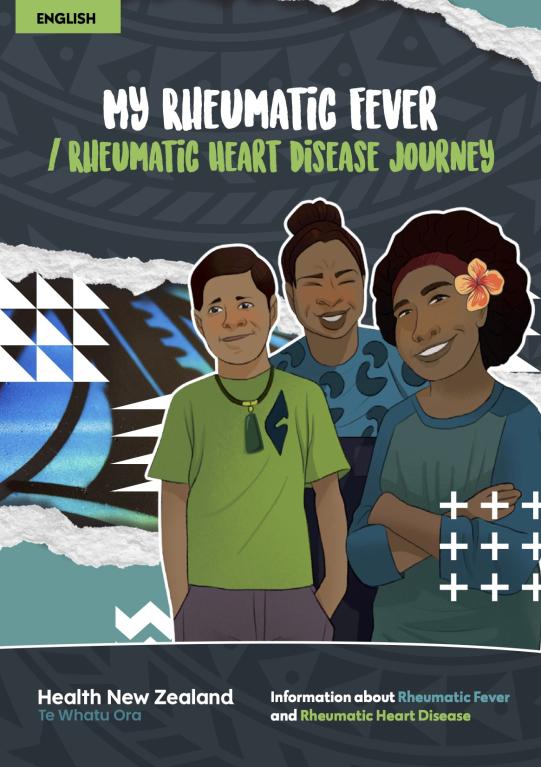
If your child has been diagnosed with rheumatic fever or rheumatic heart disease, there is some information to help you, your child and your whānau navigate the journey ahead.
How rheumatic fever affects the heart
The heart is a pump with 4 chambers (rooms) and 4 valves. A heart valve acts like a one-way door. It makes sure that blood pumped by the heart flows in one direction only.
If rheumatic fever damages the heart valves, this is called rheumatic heart disease. When your health professional listens to your child's heart, they may hear extra sounds called murmurs. Murmurs are often normal in unwell tamariki but sometimes they can be a sign that blood is flowing the wrong way through a leaky valve.
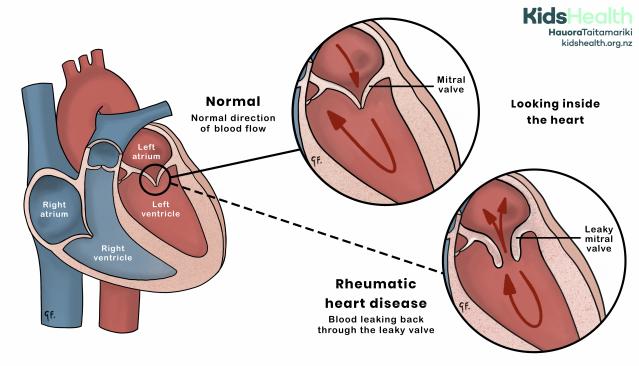
An illustration showing how rheumatic heart disease damages the mitral valve causing blood to leak backward.
Source: KidsHealth
transcribeTranscript
The illustration shows a cross-section of the heart with two detailed views comparing normal and abnormal blood flow.
On the left is the main heart diagram labelled Right atrium, Right ventricle, Left atrium, and Left ventricle. A small circle highlights the mitral valve between the left atrium and left ventricle.
A magnified view at the top right shows a Normal mitral valve with arrows indicating the normal direction of blood flow from the left atrium into the left ventricle.
A second magnified view below shows Rheumatic heart disease, where the damaged mitral valve allows blood to flow backward into the left atrium. Arrows show blood leaking back through the valve.
At the top right is the KidsHealth logo with the website: kidshealth.org.nz.
Rheumatic heart disease causing leaky heart valves
Not everyone with rheumatic fever will have heart valve damage, but people with badly damaged heart valves may need heart surgery.
When rheumatic fever damages your child's heart valve, their heart cannot pump properly and they may feel:
- short of breath when lying down flat
- the need to sleep with more pillows
- more short of breath than others when doing the same exercise
- short of breath when doing nothing
- a lack of energy
Check out a series of animated videos about rheumatic fever and the heart.
Rheumatic Fever Animated Videos
Getting well after rheumatic fever
A hospital stay
Tests
During your child's stay in hospital, they will have many tests. These include blood tests and an echo scan (echocardiogram) to check on your child's heart.
Rest and pain relief
The treatment for sore joints is rest and pain relief.
Have first penicillin injection
Your child will have penicillin to get rid of the strep bacteria. They will have their first penicillin injection before leaving hospital.
Rest in hospital
Depending on your child's symptoms and test results, they may need to stay resting in hospital for some weeks or months.
Some tamariki may need heart surgery
Tamariki with badly damaged heart valves may need heart surgery.
At home after the hospital stay
Resting at home
Your doctors will let you know how long your child will need to rest when they go home.
Starting regular exercise when it's safe to do so
As soon as your doctor says it's safe for your child to be active again, it's important that your child start exercising regularly and leading a healthy lifestyle.
Having regular penicillin injections
With proper care and regular penicillin injections, most people who have had rheumatic fever lead a normal life. Penicillin is the best antibiotic to prevent rheumatic fever. If your child cannot have penicillin, your doctor will discuss another treatment with you.
It's very important that your child doesn't get rheumatic fever again. Every strep throat can lead to rheumatic fever, which can cause more damage to their heart.
To stop your child from getting strep throat, which can cause rheumatic fever again, make sure they have regular penicillin injections. Talk with the nurse about arranging your child's penicillin injections, to see what may work best for you.
Keeping well after recovering from rheumatic fever
How can your child avoid getting rheumatic fever again?
The best way to prevent rheumatic fever is to make sure your child has regular penicillin injections on time. Penicillin kills the strep bacteria that trigger rheumatic fever, stopping any further damage to your child's heart valves.
Your child will have penicillin injections:
- usually every 28 days
- in a muscle near their bottom or hip
- from your community nurse, district nurse or public health nurse
Penicillin injections can be painful. Nurses can use numbing medicine (local anaesthetic), distraction techniques and other ways to minimise the pain.
The nurse may come to your home or your school clinic to give the injection. There are also community nurse clinics available.
An animated video showing why penicillin injections for rheumatic fever are important.
Source: KidsHealth
How long will my child need penicillin injections?
Your child will need to have injections, usually every 28 days, for at least 10 years, or until they are 21 years old, whichever is longer. In some cases, particularly if your child has heart valve damage, they may need to continue penicillin injections for longer.
Never stop penicillin treatment without discussing it first with your child's doctor, as your child could get rheumatic fever again. This can cause more damage to their heart valves. Remember to tell your child's nurse if you are moving house, going overseas, on holiday, or going away. Your child may need to get their injection early, or their nurse may be able to arrange for them to receive their injections elsewhere.
Tips for remembering penicillin injections
- write it on your calendar
- ask your nurse to text you a reminder
- ask your whānau (family) to help you remember
- write a reminder on your fridge
Penicillin Injections After Rheumatic Fever
Why do you need to tell people that your child has had rheumatic fever?
Heart valves damaged by rheumatic heart disease can occasionally get infected during certain types of operations and dental work. Your child may need extra antibiotics to help protect their heart. This is why it is important to remember to tell every health professional, dentist or dental therapist that your child has had rheumatic fever before they have any medical procedures or operations.
Ask your health professional for a copy of a rheumatic fever wallet card. It has important information about your child's rheumatic fever. You should show it to any dentist, dental therapist or health professional before they treat your child.
At the dentist
Everyone has tiny bugs in their mouths. These bugs are usually harmless, but sometimes when the dentist is working on your child's teeth, the bugs can get into their bloodstream. If they reach your child's heart, the bugs can cause more damage to the heart valves. This is called endocarditis.
Your child can look after their teeth and help to avoid any infection by:
- having their own toothbrush - don't let them share with anyone
- brushing their teeth twice a day with fluoride toothpaste
- not having sweet food and drinks too often
- having dental checks every 6 months
An animated video showing how to look after your teeth after rheumatic fever.
Source: KidsHealth
Rheumatic fever and pregnancy
If you have had rheumatic fever or rheumatic heart disease, you'll need a heart check-up before getting pregnant.
More information
Pū Manawa provides information and guidance on rheumatic fever and rheumatic heart disease from some of Aotearoa New Zealand's leading health experts. See their website for information, resources and whānau stories.

Heart Kids New Zealand supports Kiwi kids, teens and whānau impacted by congenital heart defects or acquired childhood heart conditions. Visit their website to see how they can support you and your whānau.
The Heart Foundation is a non profit, non government organisation that funds research that promotes heart health. Their website has resources as well as shared experiences from people with rheumatic fever and rheumatic heart disease.
Acknowledgements
The Paediatric Society of New Zealand is grateful to the Heart Foundation for providing the content for this page. The booklet Rheumatic fever and rheumatic heart disease (PDF, 1.7MB) was revised in November 2019.
The video is copyright Kylie Sullivan 2017. Licensed under a Creative Commons Attribution-ShareAlike 3.0 Unported License. Acknowledgements: Starship Child Health, Starship Foundation, Auckland District Health Board (Alison Leversha, Faith Mahony).
Rheumatic heart disease illustration by Dr Greta File. Property of KidsHealth.
