

Key points about cuts, scratches and grazes
- a laceration is a cut or tear in the skin
- most lacerations are not deep and heal easily with self-care
- deeper lacerations may need stitches by a health professional
- a graze (or abrasion) is a scraping or rubbing away of the skin surface
- grazes are not deep and usually heal within 1 to 2 weeks with self-care
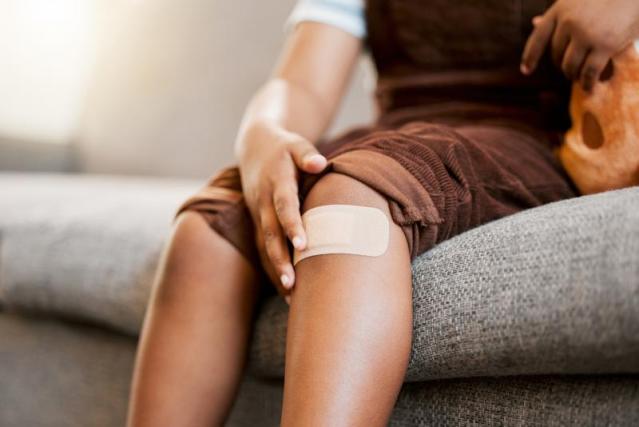
A child with a plaster on their knee.
Source: iStock
Managing your child's cut or graze
If your child has a cut or graze, follow these steps to help it heal well.
Wash your hands with soap and water before and after cleaning any wound.
If necessary use direct pressure to stop bleeding.
Clean the wound with lukewarm tap water. Use a sterile saline solution if you have some in your first aid kit.
Leave clean, loose flaps of skin in place if possible. This can help protect the wound.
Apply antiseptic ointment (such as savlon or betadine) only if the wound is dirty. Do not use it for longer than 1 to 2 weeks.
Keep the dressing in place for the first 24 hours if possible. After this, you can gently wash the wound with water. Replace the dressing if it becomes dirty or wet.
Encourage your child not to pick or scratch the wound. This can slow healing and increase the risk of infection.
Check whether your child needs a tetanus injection - ring your GP practice if you are unsure.
Health professionals recommend a booster tetanus injection if:
- it is more than 10 years since your child's last tetanus injection
- it is more than 5 years since their last tetanus injection and the wound is dirty, contaminated or deep
When to get medical help for a cut or graze
See your health professional if:
- you can't fully clean the wound
- the bleeding won't stop
- the wound is deep and the skin is gaping
If you have managed to clean and dress the wound, keep an eye on it and see your health professional if:
- your child has any new loss of feeling, numbness or inability to move the affected limb
- you notice increased redness, swelling, pain or it becomes warm to touch
- red streaks develop
- there is a coloured or smelly discharge
- the wound is not improving after 1 to 2 weeks
Call Healthline for free on 0800 611 116 if you are unsure what you should do.
What is a puncture wound?
A puncture wound is when something penetrates layers of skin, such as a knife, nail or tooth. Puncture wounds have a higher risk of infection because bacteria can be pushed deep into the skin.
Puncture wounds usually close very quickly. You will need to clean the wound thoroughly to prevent infection.
What to do if your child has a puncture wound
If your child has a puncture wound, follow these steps to help it heal well.
Wash your hands with soap and water before and after cleaning the wound.
Flush the wound with running tap water to remove all dirt.
Encourage your child not to pick or scratch the wound. This can slow healing and increase the risk of infection.
Check whether your child needs a tetanus injection - call your GP practice if you are unsure.
Health professionals recommend a booster tetanus injection if:
- it is more than 10 years since your child's last tetanus injection
- it is more than 5 years since their last tetanus injection and the wound is dirty, contaminated or deep
When to get medical help for a puncture wound
See your health professional if:
- there is something stuck in the puncture wound
- your child has any numbness or tingling below the puncture
If you have managed to clean and dress the wound, keep an eye on it and see your health professional if:
- your child has any new loss of feeling, numbness or inability to move the affected limb
- you notice increased redness, swelling, discomfort or it becomes warm to touch
- red streaks develop
- there is a coloured or smelly discharge
- the wound is not improving after 1 to 2 weeks
Call Healthline free on 0800 611 116 if you are unsure what you should do.
Healthline is available 24 hours a day, 7 days a week on 0800 611 116. Call Healthline if you need advice about a child of any age who is unwell, hurt, or has any symptoms of sickness. It's free to callers throughout New Zealand, including from a mobile phone.
