

Managing diabetes at early childhood education and schools
Tamariki (children) with diabetes go to early childhood education and school and participate in all educational and social activities.
By working closely with staff, diabetes can be safely managed at early childhood education and school. And, your child can fully participate in activities without discrimination.
You might like to share a 30 minute video with staff at your child's school.

The Diabetes Team at Starship developed a video for school staff, to increase their knowledge and understanding of diabetes.
Use of mobile phones as a medical device
Many students with diabetes use their mobile phones to receive their glucose levels from a CGM device. The Clinical Network for Children and Young People with Diabetes have developed a letter for schools. The letter explains the importance of students having access to their mobile phones for safely managing their diabetes.
See the letter for school about using a mobile phone for managing diabetes. Make sure you include some wording about using a mobile phone for medical reasons when you're filling out the diabetes action and management plan.
Diabetes action and management plans
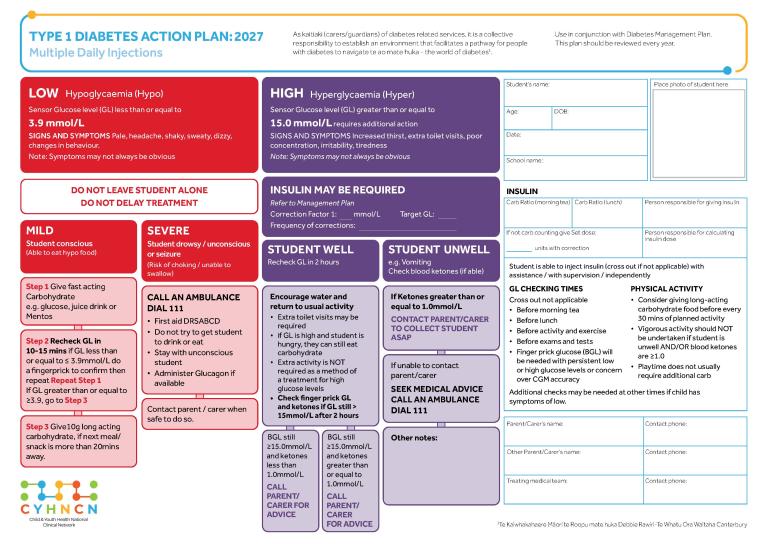
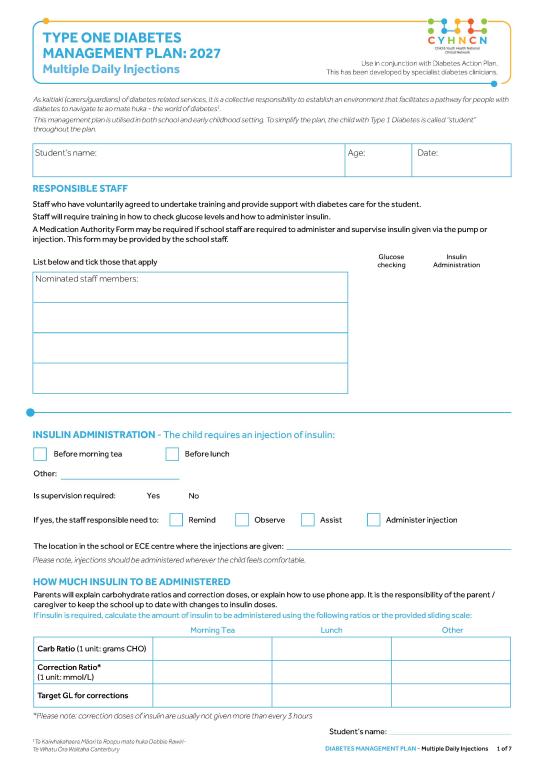
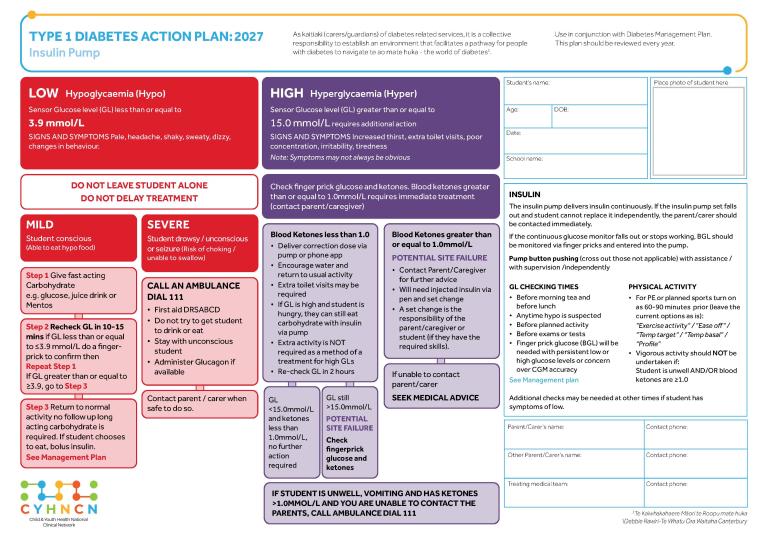
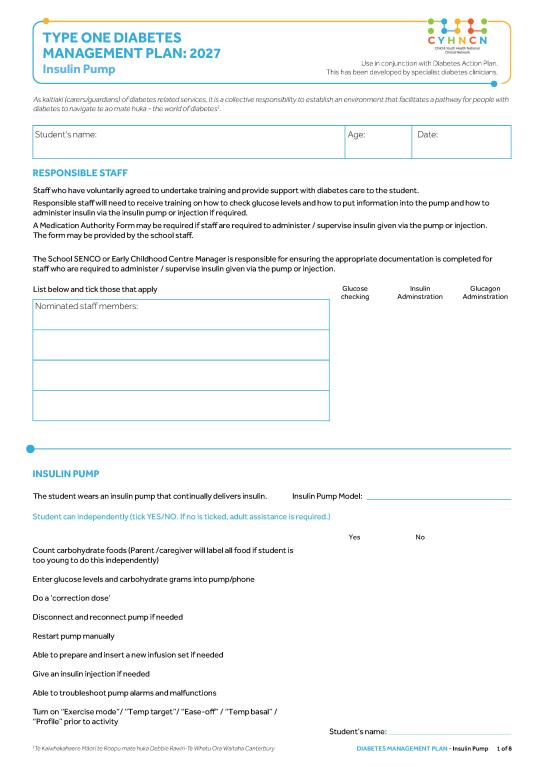
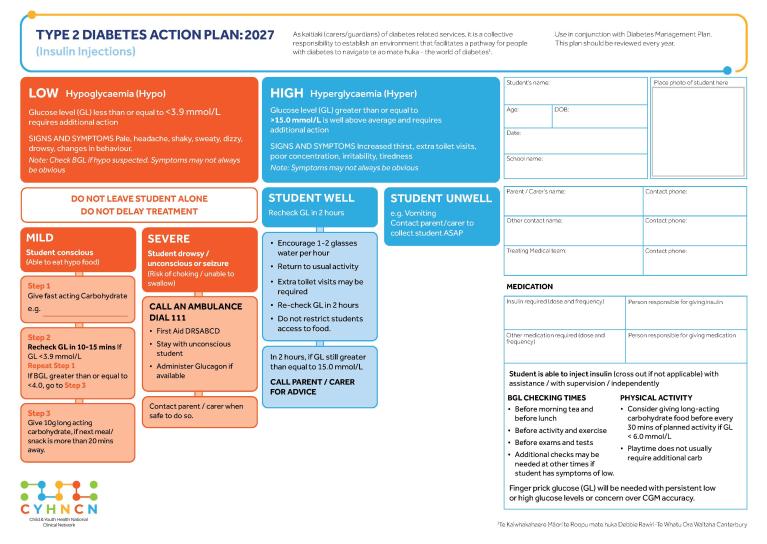
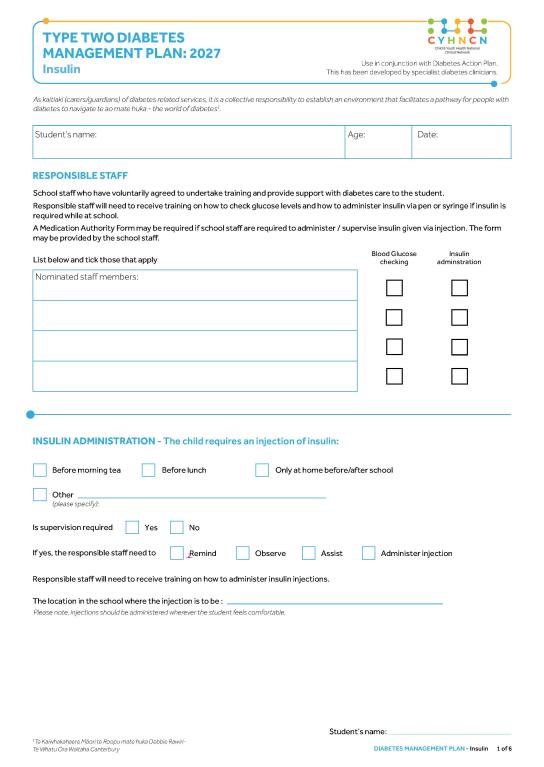
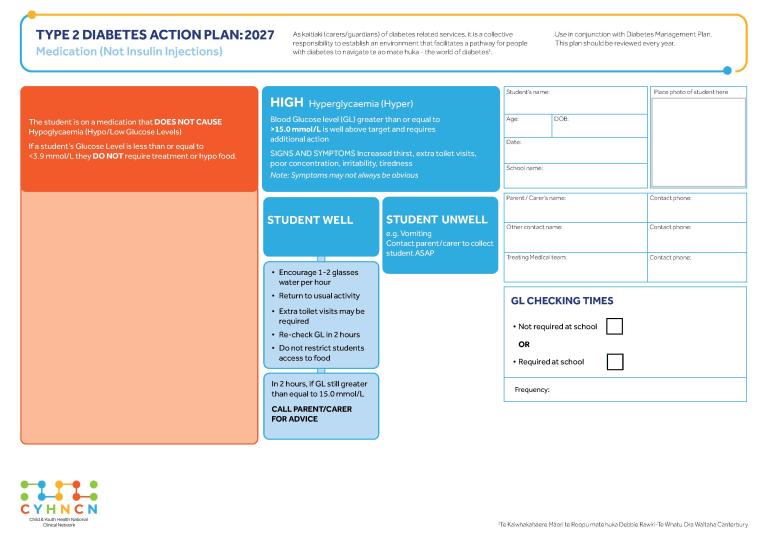
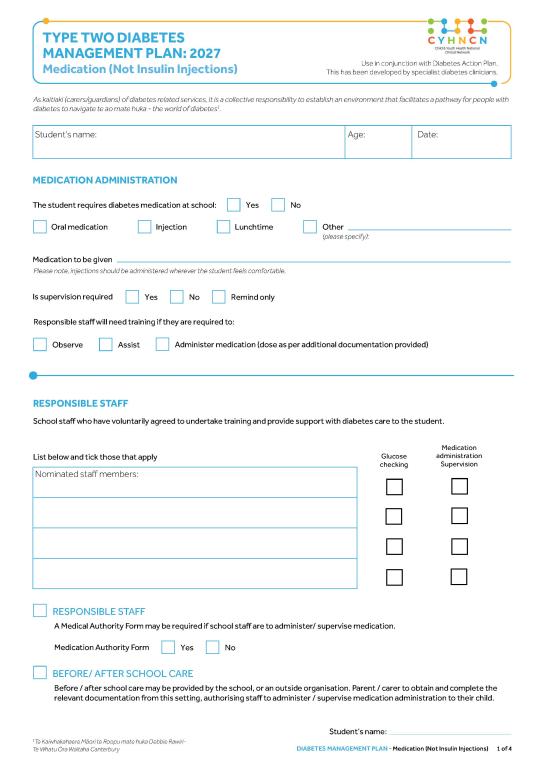
Every child living with diabetes has specific needs. The Workstream for Children and Young People with Diabetes has developed a collection of action and management plans. These aim to support families in creating a safe environment at early education and school for diabetes care.
Choose the right action and management plan for your child.
For children with type 1 diabetes
Multiple injections of insulin each day
Source: KidsHealth
Source: KidsHealth
Insulin pumps
Source: KidsHealth
Source: KidsHealth
For children with type 2 diabetes
Insulin injections
Source: KidsHealth
Source: KidsHealth
Medication - not insulin injections
Source: KidsHealth
Source: KidsHealth
Some other diabetes resources for schools
As well as an action and management plan, there are other resources you need to give your child's education centre or school.
Hypo kit - this will include items to use if your child has a 'hypo' or low blood glucose level. You'll need to provide clear instructions about how to give the items to your child. This can also go into the school management plan. Items could include glucose tablets, juice drinks as well as carbohydrate snacks (such as muesli bars).
School resource flip chart - this was in your newly diagnosed pack from Diabetes New Zealand. You can download extra copies of the school resource flip chart.
Source: Diabetes New Zealand
Creating a safe environment for children with diabetes at school
It's important for whānau to work closely with school staff to create a safe environment for diabetes. Arrange a meeting with the school as early as possible to discuss the action and management plan and the care your child needs.
Important points to cover with school staff
Completing management plans
It's best for whānau to complete management plans with school staff. There is a lot of online and written material to help support school and early childhood education staff. If needed, healthcare professionals can help with planning. But, whānau know their child best and should be the main contact.
Wearing medical identification
Tamariki with diabetes should always wear medical identification (such as a wrist band or bracelet) at school.
Testing glucose levels and injecting insulin
It's very important to allow tamariki with diabetes to:
- test their glucose levels in the classroom if they wish
- inject insulin in public if they wish
It's also important to offer them privacy to do either of these if they prefer.
When there are symptoms of hypo
Never leave tamariki with type 1 diabetes alone when they are having symptoms of hypo.
Don't prevent them from eating or drinking to treat or prevent a hypo.
School camps
It's important that any child with diabetes can fully participate in the school curriculum. This involves school camps and outings - both day and overnight events. For these to be successful, preparation is very important.
The following include checklists of things that family, whānau and the school need to consider.


Exams
There are special conditions for rangatahi living with type 1 diabetes sitting NCEA or Cambridge examinations. Talk to your child's school at the beginning of each academic year. See some information about diabetes and exams for young people with diabetes.
Your child's school needs to submit a 'specialist medical report' to NZQA, early each academic year, for each young person. This report confirms the special requirements for students with diabetes.
See examples of the medical certificate for type 1 and type 2 diabetes. These certificates will be part of the NZQA application for students with diabetes.
See the sample medical certificates for students with type 1 or type 2 diabetes.
Acknowledgements
The content on this page has been produced by the CYHNCN Workstream for Children and Young People With Diabetes.
