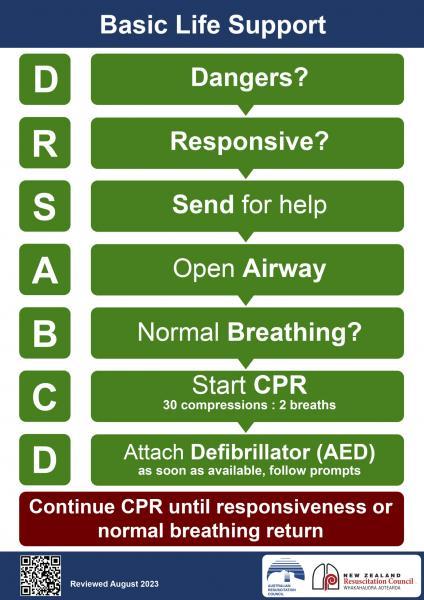

This page talks you through CPR for children over 12 months. See the page on CPR for babies under 12 months to learn the steps for babies.
Emergencies - CPR For Babies Under 12 Months
How to do CPR for children over 12 months
Check for any danger to you, the child, or people nearby. Do what you can to reduce the danger.
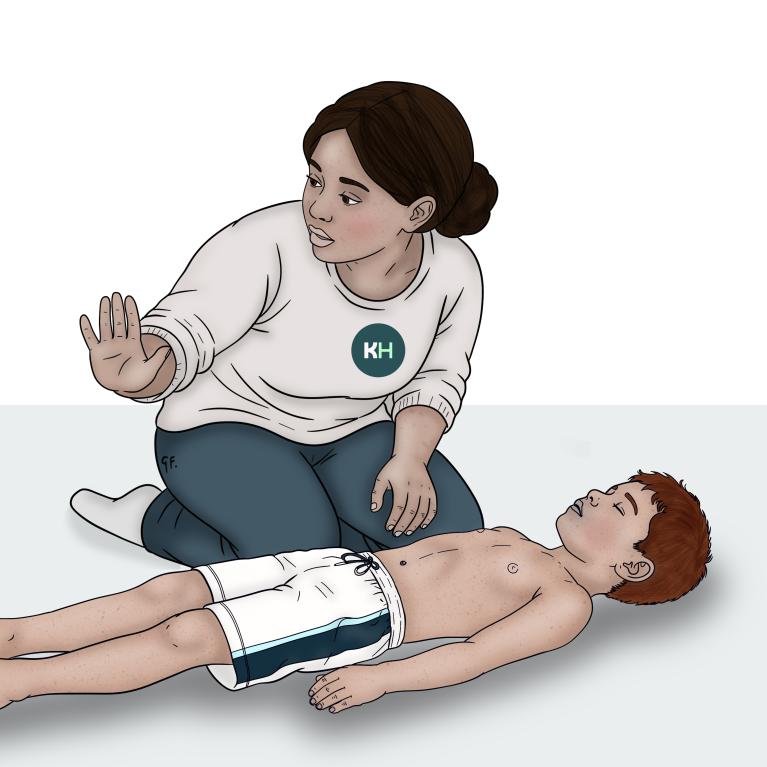
Check the child for a response. Talk loudly and squeeze the child's shoulder firmly. See if the child responds.
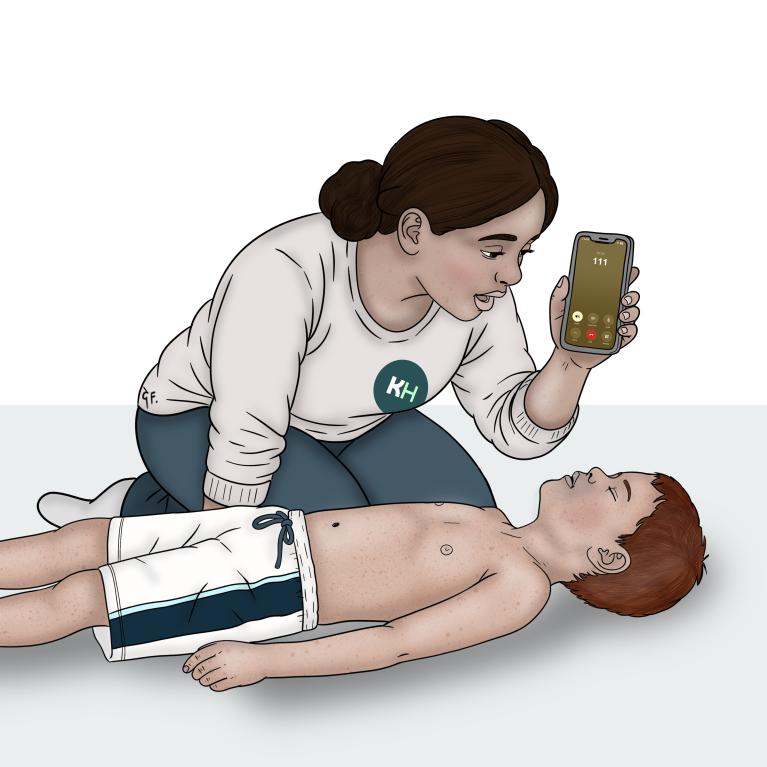
Tilt the child's head back and lift their chin. This will help open their airway.
If there’s anything obvious in the mouth, like food, use a finger to sweep it out.
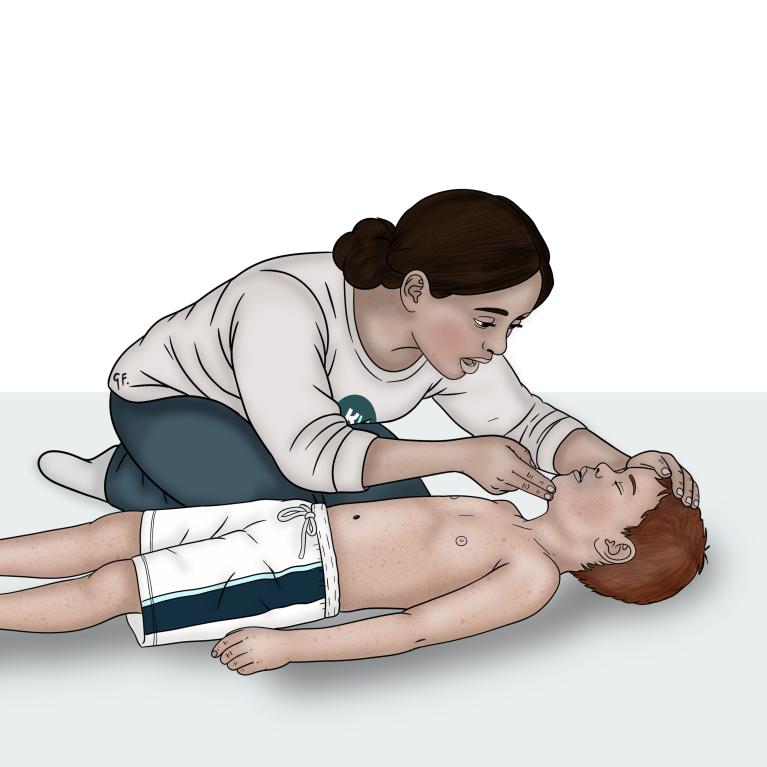
Check for breathing. Listen and feel for air coming out of their mouth or nose.
If you are worried the child is not breathing - start CPR.
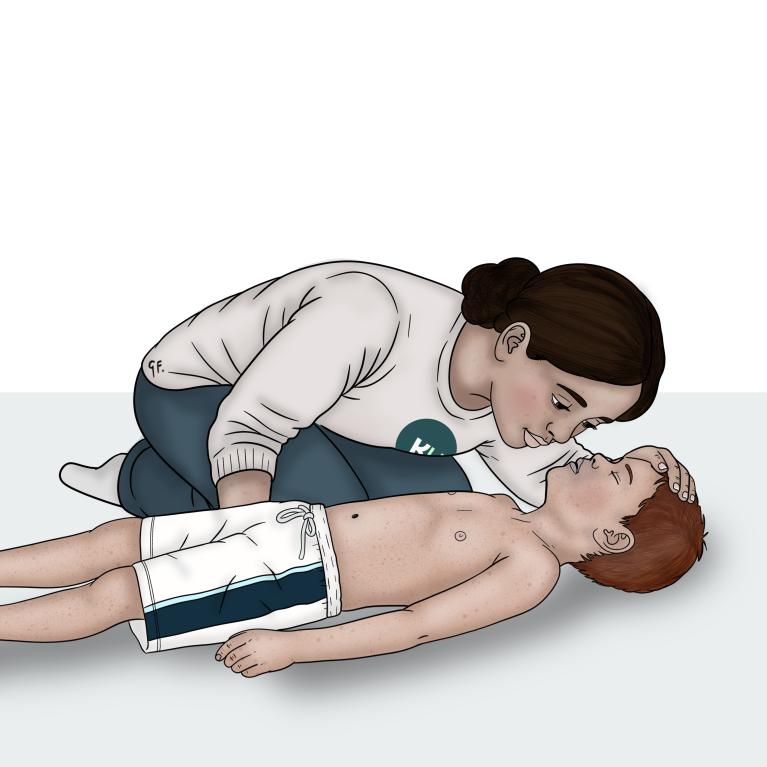
Put the child on their back, on a firm surface.
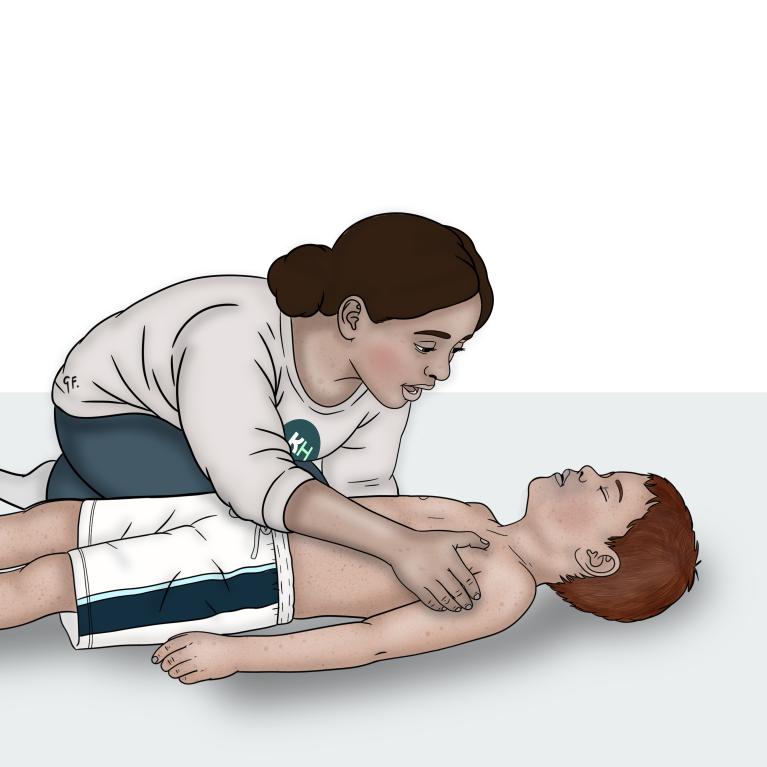
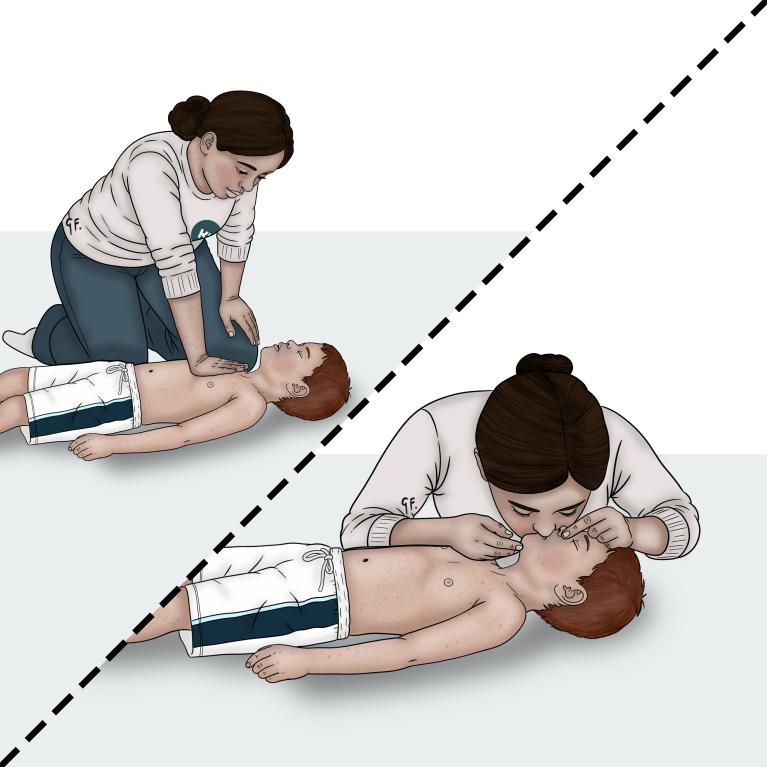
Place the heel of one hand in the centre of the child's chest just below the nipple line.
Start chest compressions at a rate of 100 per minute.
Once you have completed 30 compressions, pinch the child's nostrils and give 2 breaths into their mouth.
Keep giving 30 compressions followed by 2 breaths until help arrives.
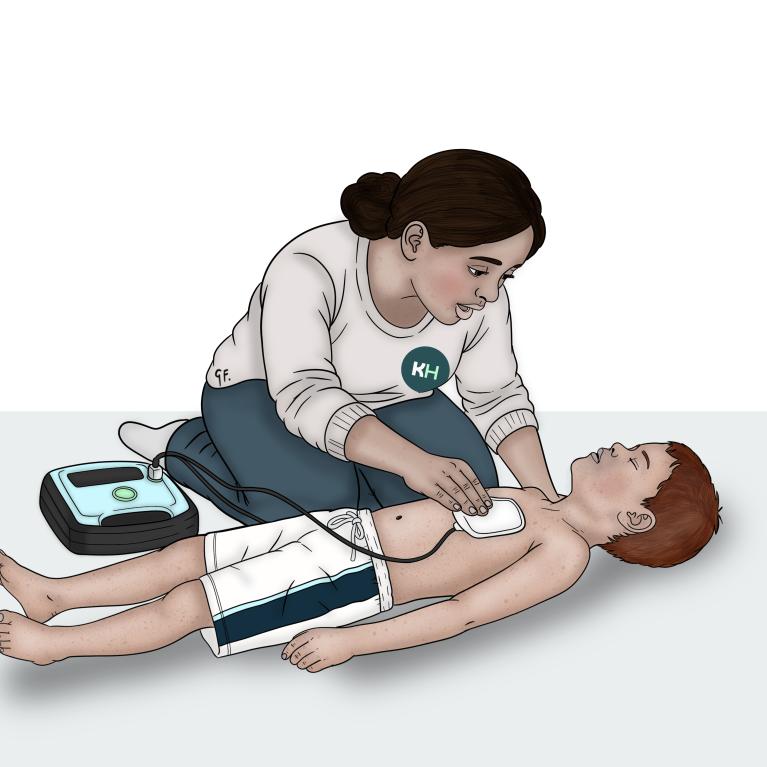
If there is an AED nearby, attach it to the child as soon as possible. Turn it on and follow the instructions on the AED. The defibrillator will talk to you.
Return to CPR (step 6) and keep going until the child starts breathing normally, or help arrives.
Dr Tony Smith, St John medical director, demonstrates how to perform CPR and use an AED on tamariki.
Source: Hato Hone | St John
More information and courses
Learn how to do CPR (rescue breathing and chest compressions).
Book first aid courses at Hato Hone St John
See all first aid courses run by NZ Red Cross
AED Locations maps publicly available AEDs across Aotearoa New Zealand. Use the website to find AEDs near you and become familiar with where they are before an emergency happens.
Acknowledgements
Illustrations by Dr Greta File. Property of KidsHealth.
References