

Losing baby teeth
Your child's baby teeth will usually fall out by themselves, and permanent teeth will start to come through. This is a natural process - your child’s jaw will grow during this time, to make room for the permanent teeth.
Key things to know about losing baby teeth and new, permanent teeth:
- the first tooth to fall out is usually in the front of the lower jaw
- baby teeth will usually fall out by themselves
- if a new tooth can be seen before the baby tooth comes out, encourage your child to wiggle the baby tooth - if it takes more than 2 months to fall out or if your child is in pain, contact your child's local oral health service
- the first permanent molars come through at the back of the mouth between the ages of 6 and 7 - they do not replace baby teeth
- your child's baby teeth will continue to fall out until they are about 12 years of age
The teenage years
It's important your teenager looks after their teeth by:
- brushing twice a day
- eating healthy food
- protecting them while playing sports with mouth guards
- having regular dental check-ups
Teeth straightening
Your child’s dentist may recommend teeth straightening if your child has crooked teeth or a bite that is not lined up properly. This treatment is not currently funded in New Zealand, so there will be a cost.
Crowded or crooked teeth can sometimes cause problems, such as tooth decay, gum disease, or difficulty eating. A dentist or orthodontist will talk with you about the different ways to straighten your child’s teeth and the cost involved.
Visit the New Zealand Dental Council website to find out more about orthodontic treatment.
Animation about orthodontic treatment.
Source: New Zealand Dental Council
Wisdom teeth
Wisdom teeth are the teeth right at the back of the mouth and usually erupt between the ages of 17 and 25. Most people have 4 wisdom teeth - 2 at the top and 2 at the bottom.
Wisdom teeth can cause problems for some people if there is no room for them to come through. Your child’s dentist may recommend removing their wisdom teeth if this is the case.

How to look after your child's teeth - 6 steps
Follow these 6 steps to protect your child's teeth, and help them look after their own teeth.
Brush teeth twice a day with a fluoride toothpaste.
Have regular dental check-ups.
Protect your child's teeth while playing sport.
Check for signs of tooth decay (holes) once a month.
Choose healthy snacks.
Drink water or milk.
Brushing teeth
Tamariki will be able to start brushing their own teeth around the age of 8. A parent or caregiver will need to help them until then.
Important things to know for young children
If your child is too young to brush their own teeth, it might be easier to stand behind them and gently tilt their head back as you brush.
Use a small, soft brush with fluoride toothpaste twice a day. One brushing should be at night before they go to bed.
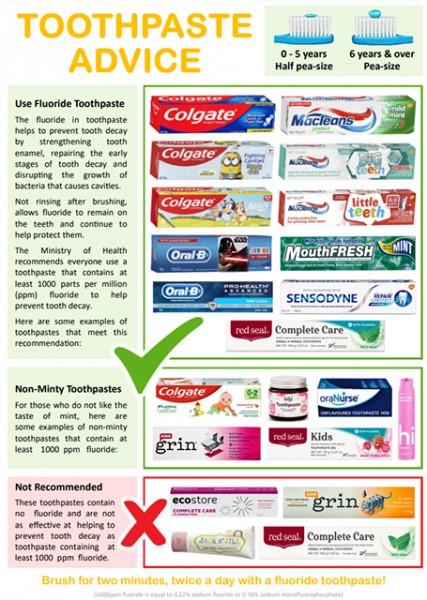
Use a half-pea size amount of toothpaste until about the age of 6 - your child should start using a pea-sized squirt of toothpaste from the age of 6.
You should brush your child's teeth - or they should brush themselves - for 2 minutes:
- all around the inside surfaces, where the teeth meet the gums, and also the top chewing surfaces
- on the front of the teeth, brushing in tiny circles all around the outside surfaces, close to the gums
- twice a day, including at night before they go to bed
Teach your child to spit out the leftover toothpaste after brushing. Don't rinse with water, because a small amount of fluoride toothpaste left around the teeth will help to protect them.
See the toothpaste advice chart from the Bee Healthy Regional Dental Service on which toothpaste to use, which ones to avoid, and how much to use.
Regular dental check-ups
Oral healthcare is free for all tamariki until they turn 18. Enrol your child with the service as early as possible, so you can arrange the first check-up. Regular check-ups of your child's teeth increase the chances of finding and treating any tooth decay (holes) early.
To enrol with a service or to make an appointment, phone 0800 TALK TEETH (0800 825 583). Your oral health therapist will tell you how often your child should have a check-up.
If your child accidentally bumps their teeth, take them to your local dentist, even if the teeth still look all right. The dentist is able to assess and register your child's injury with ACC. ACC may fund and cover some of the costs, but some dentists will require a surcharge. You can check when you are making the appointment with the dentist.
Find out more about dental care in New Zealand.
Protect your child's teeth while playing sport
It is recommended your child wear a mouth guard when playing contact sports – this will protect their teeth and gums. A broken tooth is damaged for life.
If an adult tooth is knocked out, put it back in the socket if you can. If you can't, keep it moist by putting it in your child’s mouth next to their cheek or in a cup of milk and take the tooth and your child to their oral health professional as soon as possible as they may be able to save the tooth.
Check for decay
Gently lift your child's top lip once a month to check inside their mouth. It's a quick and easy way to see if tooth decay is present.

Gently lift your child's top lip once a month to check inside their mouth. It's a quick and easy way to see if tooth decay is present. See the lip the lip pamphlet (PDF, 1.33 MB) on the NZDA website.

See the Plunket website to read about tooth decay and what to look for.
Choose healthy snacks
Healthy eating = healthy teeth. To protect your child's teeth, give them low-sugar snacks between meals such as fruit, fresh vegetables, yoghurt and other dairy foods. Foods that are high in sugar can damage your child's teeth and cause tooth decay.
It's also important to give teeth a rest during the day, so limit snacks to 2 to 3 times a day.
Healthy Eating For Children & Young People
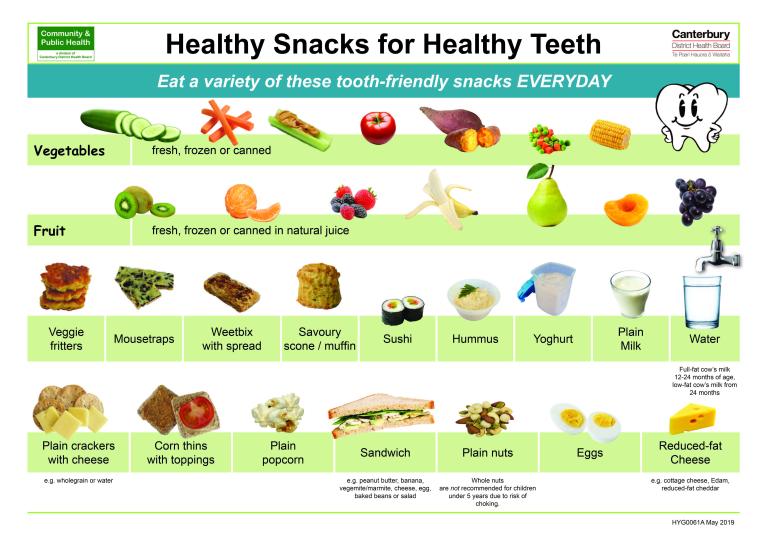
Check out the healthy snacks for healthy teeth poster (PDF, 8.8 MB) on the community and public health website.
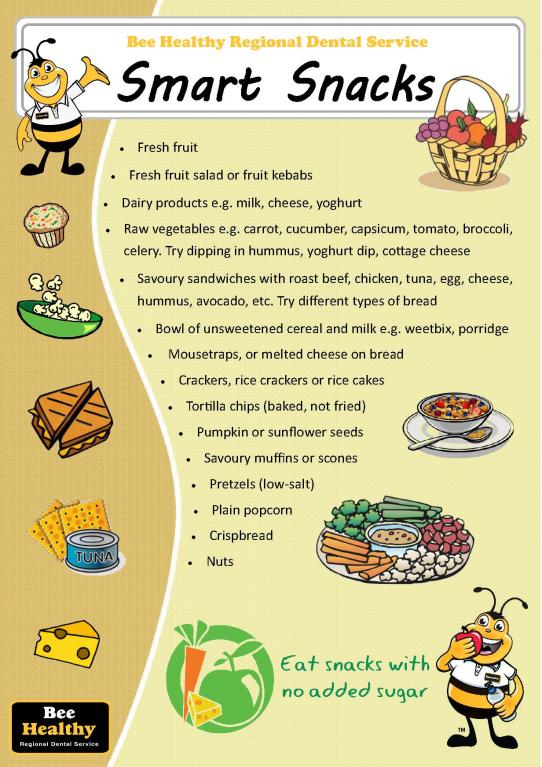
Check the smart snacks poster (PDF, 3 MB) for snack and lunchbox ideas for your child on the Bee Healthy Regional dental service website.
Drink water or milk
The best drinks for your child's teeth are water and plain milk. Do not give your child drinks that have natural or added sugar, such as fruit juice, cordial, fizzy drinks, flavoured milks and chocolate drinks. These can cause tooth decay.
More information

See the resources section of the NZ Dental Association website for more information and free downloadable resources.
