

Key points about chickenpox in immunosuppressed children
- chickenpox is usually a mild illness, but it can make immunosuppressed tamariki very sick
- it is important to know if your child is protected from (immune to) chickenpox
- if your child is not immune and has close contact with someone with chickenpox, see a health professional the same day
- if your child develops a rash that could be chickenpox, see a health professional the same day
What is chickenpox?
Chickenpox is a common illness caused by the varicella virus. It spreads easily from person to person.
Most tamariki recover fully. But tamariki with weak immune systems can become very unwell.
See the chickenpox page for more general information.
What does immunosuppressed mean?
Immunosuppressed means your child’s immune system does not work as well as it should.
This can happen if your child:
- takes immune suppressive medicines
- has serious medical conditions that affect the immune system
Who is at risk of chickenpox?
Tamariki are at risk of chickenpox if they:
- have never had chickenpox
- have not had the chickenpox vaccine
- do not have immunity to chickenpox
If one child in a household gets chickenpox, other tamariki who are not immune are very likely to get it.
Preventing chickenpox
Vaccination
Vaccination protects most tamariki from chickenpox. All tamariki in Aotearoa New Zealand can have a chickenpox vaccination at 15 months of age. It is part of the National Immunisation Schedule. It is also free for household members who have not been vaccinated or have not had chickenpox before.
People who care for or live in the same household as immunocompromised tamariki can and should have the chickenpox vaccine if they are not immune. This helps reduce the risk of bringing the infection into the household.

See the Health New Zealand Te Whatu Ora website for more information on the Chickenpox (varicella) vaccine.
Staying away from people with chickenpox
Keeping your child away from those with chickenpox also lowers the risk. If someone has active shingles, your child should stay away from them and avoid touching the shingles blisters.
Symptoms of chickenpox in immunosuppressed children
Chickenpox often starts with:
- a fever
- a headache
- tiredness
- a runny nose or cough
A red rash usually appears 1 to 2 days later. The rash turns into small blisters filled with fluid. The blisters then crust over and form scabs.
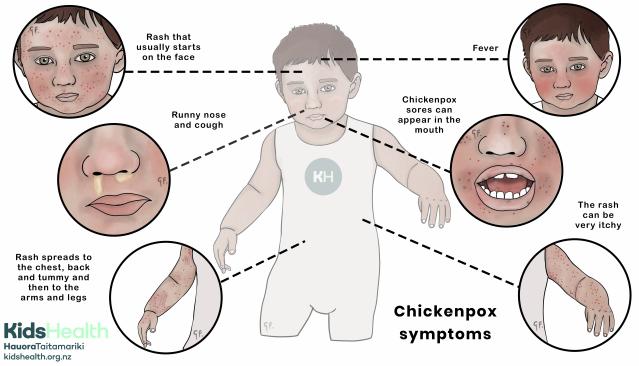
An illustration of chickenpox symptoms in children. It shows the rash on the face and body, fever, cough, runny nose, and sores in the mouth.
Source: KidsHealth
transcribeTranscript
The illustration is titled Chickenpox symptoms.
A child is shown in the centre with dotted lines pointing to circles around the body showing symptoms:
- Rash that usually starts on the face – illustrated with red spots on the child’s face.
- Fever – shown with a flushed, hot face.
- Chickenpox sores can appear in the mouth – illustrated with red spots inside the mouth.
- The rash can be very itchy – shown with rash on the arm.
- Rash spreads to the chest, back and tummy and then to the arms and legs – illustrated with rash on the arm and torso.
- Runny nose and cough – shown with mucus at the nose.
At the bottom left is the KidsHealth logo with the website: kidshealth.org.nz.
See the chickenpox page for more information about the rash, including photos.
In immunosuppressed tamariki, chickenpox can be more severe. It can affect:
- the skin
- the lungs
- the brain
- the eyes
Immunosuppressed tamariki may develop more spots. They may also feel much more unwell than other tamariki.
Diagnosing chickenpox in immunosuppressed children
A health professional can diagnose chickenpox by checking your child and looking at the rash.
Managing chickenpox in immunosuppressed children
If your child is not immune and has contact with someone with chickenpox, see a health professional the same day.
Your child may need:
- special antibodies given by injection (called immunoglobulin)
- antiviral medicine to prevent or treat the infection
If your child develops chickenpox symptoms, take them to a health professional urgently. Tamariki on immune suppressive medicines usually need antiviral medicine. Some tamariki need to go to hospital for monitoring and treatment.
Your child must stay away from school, childcare and public places while infectious. They can return once all the spots are dry and scabbed over.
When to get medical help for your child
When to see a health professional
See a health professional the same day if:
- your child has been in contact with chickenpox and is not immune
- your child develops a rash that could be chickenpox
When to see a health professional urgently
See a health professional urgently if your child:
- looks very unwell
- has trouble breathing
- has a severe headache
- becomes confused or very drowsy
- has severe skin redness, swelling or pain
When to call 111
Call 111 and ask for urgent medical help if your child:
- is blue around the mouth or
- is struggling to breathe or
- is hard to wake or
- is floppy
Looking after your child at home
After your child has seen a health professional, follow their advice about caring for your child at home. See the main page on chickenpox for information on caring for your child while they recover.
Possible complications from chickenpox in immunosuppressed children
Immunosuppressed tamariki have a higher risk of complications.
Skin infections
The most common complication is a secondary skin infection that needs antibiotic treatment. Bacterial skin infections can spread to other parts of the body. This can include:
- a lung infection (pneumonia)
- a bloodstream infection (septicaemia)
Other complications
More serious complications can include:
- brain inflammation (encephalitis)
- severe secondary infections needing intensive care
- death - in very rare cases, tamariki can die of complications from chickenpox
Early treatment reduces the risk of serious complications.
Information for schools and childcare centres
Ask teachers to tell you if someone in your child's class has chickenpox.
Teachers should also tell parents if there are more than 2 to 3 cases of chickenpox elsewhere in the school or childcare centre.
If your immunosuppressed child is not immune and there is exposure at school, they should stay at home. Take them to a health professional promptly.
If your child receives antibodies, called immunoglobulin, or antivirals they should be able to return to school (if there are no more chickenpox cases). Immunoglobulin provides protection against chickenpox for about 4 weeks.
Acknowledgements
Illustration by Dr Greta File. Property of KidsHealth.
