

Information for parents and whānau on diabetes in children
Trusted, practical information for parents and whānau (family) who are supporting tamariki (children) and rangatahi (young people) with diabetes. Developed by the Clinical Network for Children and Young People with Diabetes, the following information is designed to help you and your whānau manage childhood diabetes, including treatment, school, healthy living, emotional wellbeing and sick-day care.
Type 1 diabetes
In type 1 diabetes, the main problem is that the insulin-making cells in the pancreas are destroyed and not able to make enough insulin. Type 1 diabetes is mainly diagnosed in childhood, and is not caused by being overweight or eating sweet foods.
Type 1 Diabetes In Children - An Overview
How Children With Type 1 Diabetes Can Exercise Safely
Type 1 Diabetes In Children - General Guidelines On Nutritional Management
Type 2 diabetes
In type 2 diabetes, the main problem is that the body is not able to use the insulin effectively due to resistance to insulin. The insulin-making cells in the pancreas are able to produce insulin but the insulin is not able to work well because the cells in the body are 'resistant' to its effects. Sometimes, the pancreas becomes exhausted. This leads to not enough insulin production on top of the problem of insulin resistance. Type 2 diabetes often affects older people, especially if they are overweight.
Type 2 Diabetes In Children - An Overview
Type 2 Diabetes In Children - General Guidelines On Nutritional Management
Tips For Starting GLP-1 Medicine In Children With Diabetes
Insulin and glucose monitoring
Tamariki and rangatahi with type 1 diabetes need insulin therapy to replace the insulin that the body can no longer produce. Learn more about insulin including how to give it and store it.
Glucose monitoring measurements are important for tamariki and rangatahi with diabetes to monitor daily blood glucose control and allow insulin adjustment. It also helps to monitor and treat diabetes during exercise and illness and detect high or low glucose levels so treatment can be given if needed.
Giving Insulin To Children With Diabetes
Glucose Monitoring In Children With Diabetes
Hypoglycaemia In Children With Diabetes
When To Use Mini-dose Glucagon For Children With Diabetes
Safe Use of Smart Devices for Children & Young People with Diabetes
Keeping healthy with diabetes
Keeping healthy is important for all tamariki and rangatahi, especially those with diabetes. Learn more about healthy eating, being active, supporting your child's emotional and mental wellbeing, and reducing the risk of complications.
Type 1 and type 2 diabetes are lifelong conditions. Helping your child to live a healthy lifestyle can help minimise the long-term risks and complications for your child.
How To Help Your Child Manage Diabetes As They Grow & Develop
Emotional & Mental Wellbeing In Children With Diabetes
Encouraging Children & Young People With Diabetes To Be Active
Healthy Eating For Children With Diabetes
Possible Complications In Children With Diabetes
Vaccination For Children With Diabetes
Diabetes and school
Tamariki with diabetes go to early childhood education and school and participate in all educational and social activities. By working closely with the early childhood education and school staff, diabetes can be safely managed in the school environment and your child can fully participate in education-based activities without discrimination.
Creating A Safe Environment For Children With Diabetes At School
Diabetes support
Financial support may be available because of your child's extra needs with managing diabetes. Learn about the different supports that are available for your child and whānau.
Financial Help When Your Child Has Diabetes
Managing when your child with diabetes gets sick
Tamariki and rangatahi with diabetes do not usually become unwell any more often than tamariki without diabetes. They just need extra care and attention from an adult who has received training from a specialist diabetes team.
Managing Children With Diabetes When They Get Sick
Diabetes & Travelling
Tamariki and rangatahi with diabetes can travel just the same as people without diabetes. You will need to do more planning to make sure your travel plans include management of diabetes.
Travelling With Children Who Have Diabetes
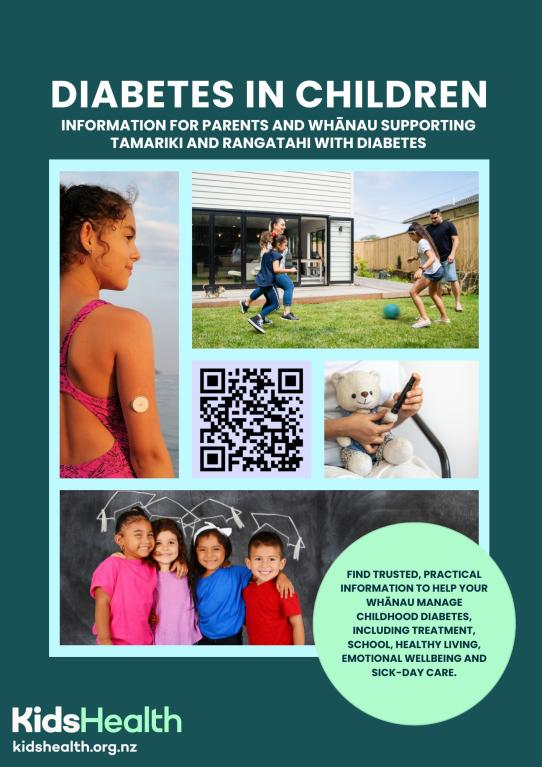
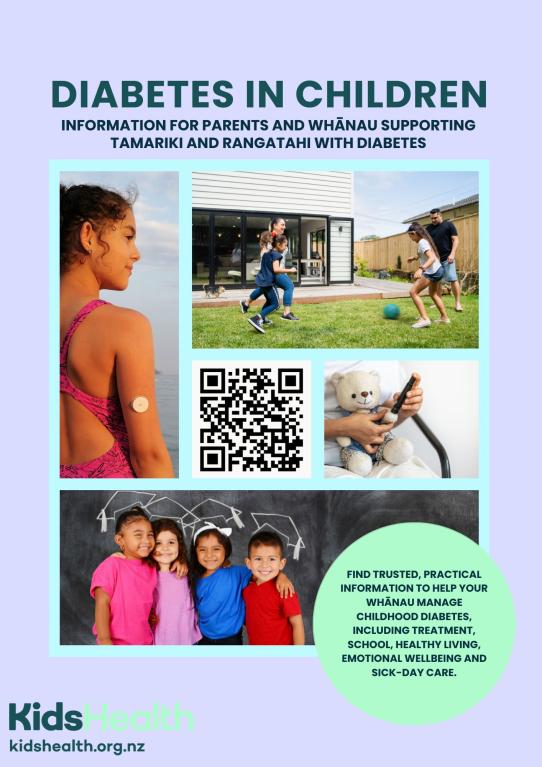
KidsHealth QR code poster
To make it easy for others to access all of KidsHealth's diabetes information, share the QR code poster. You can download it to print or share digitally.
Anyone can scan the QR code with their phone to go directly to the KidsHealth diabetes section.
Source: KidsHealth
Source: KidsHealth
