

Key points about meningitis in children and young people
- meningitis is swelling and infection of the lining around the brain and spinal cord
- viruses cause most cases of meningitis in tamariki (children) and rangatahi (young people)
- viral meningitis is usually mild
- bacteria can also cause meningitis
- bacterial meningitis is rare but serious and needs urgent treatment
- get medical help straight away if you are worried your child or young person may have meningitis
What is meningitis?
Meningitis is an infection that causes swelling of the meninges. The swelling causes symptoms such as fever, headache and neck stiffness. In severe cases, meningitis can affect how the brain works.
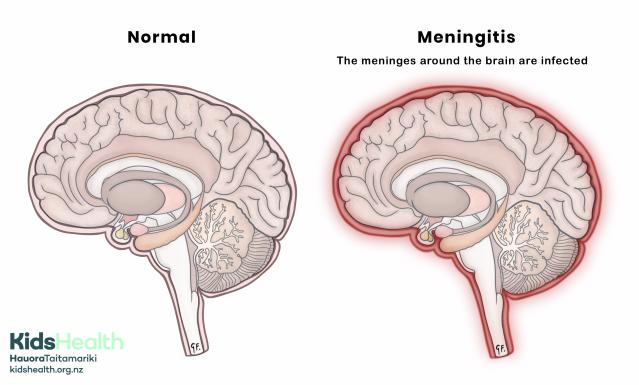
An illustration showing a normal brain compared with meningitis, where the meninges are inflamed.
Source: KidsHealth
transcribeTranscript
This illustration compares a normal brain with a brain affected by meningitis.
- On the left, labelled Normal, the brain is shown with its usual appearance and no swelling around it.
- On the right, labelled Meningitis, the meninges around the brain are infected. The outer area around the brain is shown in red to represent inflammation.
At the bottom left is the KidsHealth logo with the website: kidshealth.org.nz
Some tamariki and rangatahi with meningitis also develop an infection in the blood, called sepsis.
See the page on sepsis to learn more.
Sepsis In Children & Young People
A bit about the meninges
The brain and spinal cord are covered by thin protective layers called the meninges.
The meninges include:
- the outer layer, which sits just under the skull
- the middle layer
- the inner layer, which lies directly against the brain and spinal cord
These layers act like protective wrapping. They help cushion the brain and spinal cord and protect them from injury.
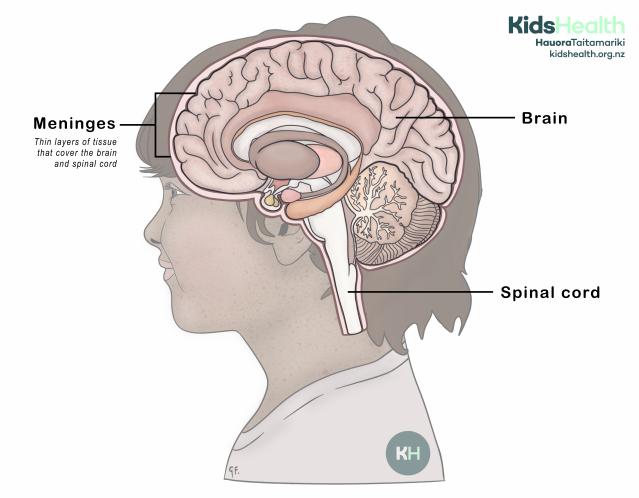
An illustration showing the meninges covering the brain and spinal cord.
Source: KidsHealth
transcribeTranscript
This illustration shows a side view of a child’s head with the brain.
- The meninges are shown as thin layers of tissue covering the brain and spinal cord.
- The brain is covered by the meninges.
- The spinal cord extends down from the brain.
At the top right is the KidsHealth logo with the website: kidshealth.org.nz.
Causes of meningitis in children and young people
Viruses and bacteria cause most cases of meningitis in tamariki and rangatahi.
Viral meningitis
Viruses cause most cases of meningitis. Many different viruses can lead to meningitis.
Viral meningitis is usually milder than bacterial meningitis. Most tamariki and rangatahi recover fully with rest and supportive care.
Bacterial meningitis
Bacteria cause fewer cases of meningitis, but bacterial meningitis is much more serious. It can lead to brain injury, hearing loss or death if health professionals do not treat it quickly.
Some bacteria that can cause meningitis include meningococcal bacteria and pneumococcal bacteria.
Meningococcal infection can cause meningitis and an infection in the blood, called sepsis.
See the page on meningococcal disease to learn more.
Symptoms of meningitis in children and young people
Symptoms of meningitis can start suddenly and get worse quickly.
Symptoms in older children and young people
- fever
- severe headache
- stiff or painful neck
- sensitivity to light
- feeling sick
- vomiting
- drowsiness or confusion
- seizures
Some tamariki and rangatahi develop a rash. The rash often looks like small red or purple spots that do not fade when you press on them. This type of rash mean your child needs urgent medical attention.
Symptoms in babies and young children
Pēpi (babies) and very young tamariki may not show the same symptoms as older tamariki. Symptoms of meningitis in pēpi and young tamariki include:
- fever or low temperature
- being very sleepy or hard to wake
- high-pitched crying that gets worse when your baby is picked up or held
- difficulty feeding
- vomiting
- pale or blotchy skin
- stiff body or floppy body
- seizures
Trust your instincts. If your baby seems very unwell, get medical help straight away.
Diagnosing meningitis in children and young people
A health professional will ask about their symptoms and examine your child.
If the health professional thinks your child may have meningitis, they will order some tests.
Health professionals often use a lumbar puncture to diagnose meningitis. A lumbar puncture takes a small sample of fluid from the lower back, from around the spinal cord. This fluid is called cerebrospinal fluid (CSF). A lumbar puncture test helps health professionals find out if bacteria is causing the infection. A health professional will do the lumbar puncture in hospital.
See the page on lumbar puncture to learn more.
Health professionals may start treatment before they have all the test results back. They will do this if they think your child or young person could have bacterial meningitis.
Managing meningitis in children and young people
Treatment depends on the cause.
Tamariki and rangatahi with viral meningitis usually need rest, fluids and pain relief. Most recover fully without specific treatment.
Tamariki and rangatahi with bacterial meningitis need urgent treatment in hospital. Health professionals will give your child antibiotics. Your child will have antibiotics as an injection into a vein or muscle.
Health professionals may also give medicine to help reduce swelling. Some tamariki and rangatahi will need care in an intensive care unit (ICU).
Early treatment improves the chance of a good recovery.
When to get medical help for your child or young person
When to see a health professional urgently
See a health professional urgently if your child or young person has:
- fever and a bad headache
- fever and a stiff neck
- sensitivity to light
- a rash that does not fade when you press on it
- severe headache with vomiting
- increasing drowsiness or confusion
When to call 111
Call 111 and ask for urgent medical help if your child or young person:
- is very hard to wake
- has trouble breathing
- has a seizure
- has pale, cold or mottled skin
- seems very unwell and is getting worse quickly
Meningitis can become life-threatening quickly. Do not wait if you are worried.
Preventing meningitis
Vaccination protects tamariki and rangatahi against some types of bacterial meningitis. This includes meningococcal and pneumococcal disease.
Make sure your child or young person receives all routine vaccinations on time. Some vaccines are part of the routine schedule. Health professionals may recommend extra vaccines for some rangatahi. This includes those living in close quarters, such as hostels or halls of residence.
If you're unsure about your child's vaccinations, ask your health professional.
Meningococcal B Disease Vaccination
Good hygiene can also help reduce the spread of some infections. Encourage regular hand washing. Teach tamariki and rangatahi to cover their mouth when coughing or sneezing.
Long-term outlook after meningitis
Most tamariki and rangatahi with viral meningitis recover fully.
Bacterial meningitis can cause serious complications, especially if treatment is delayed. After meningitis, some tamariki and rangatahi may develop:
- hearing loss
- learning difficulties
- other long-term problems
Early diagnosis and treatment improve outcomes.
If your child has had bacterial meningitis, the health professionals will arrange follow-up. This will include follow-up to check hearing and development.
If you're worried about your child after meningitis, see your health professional.
Acknowledgements
Illustrations by Dr Greta File. Property of KidsHealth
