

Key points about ringworm
- ringworm is a common fungal infection
- it often causes an itchy, scaly rash that may be ring shaped
- ringworm spreads through contact with people, animals, objects or surfaces
- antifungal medicines can treat ringworm
- see a health professional if your child has ringworm on their scalp or nails, or if it’s not improving
What is ringworm?

A photo showing ringworm on a child's arm.
Source: DermNet
Ringworm is a common infection caused by a fungus. Ringworm can affect the body, scalp, face, feet or nails. Ringworm affects both humans and animals.
Ringworm gets its name from the raised, ring-shaped pattern it can form on the skin. Ringworm is not an actual worm.
The medical term for ringworm is tinea.
How ringworm spreads
The fungus that causes ringworm spreads easily.
Ringworm can spread through:
- skin-to-skin contact with someone who has ringworm
- contact with an infected animal, such as a cat, dog or farm animal
- touching soil that contains the fungus
- sharing infected items, such as clothing, towels, bedding, hats or hairbrushes
- touching infected surfaces, such as shower floors or sports equipment
The fungus can remain on infected objects and surfaces for a long time.
Signs and symptoms of ringworm
Ringworm looks different depending on where it develops.
Ringworm on the body
Ringworm on the body usually starts as a flat, scaly patch. The patch gradually gets bigger and develops a raised, scaly edge. The skin in the centre may look more normal.
The rash may:
- look red on lighter skin
- look brown, purple or grey on darker skin
- feel itchy or uncomfortable
- have small bumps or blisters around the edge
Ringworm does not always form a clear ring.
Ringworm on the scalp
Ringworm on the scalp may start as a small bump that looks like a pimple. It can then cause:
- dry or scaly patches
- itching or soreness
- broken or brittle hair
- bald patches
- crusty areas that may look like dandruff
Sometimes the area becomes swollen and spongy or leaks pus. Scalp ringworm happens more often in tamariki (children).
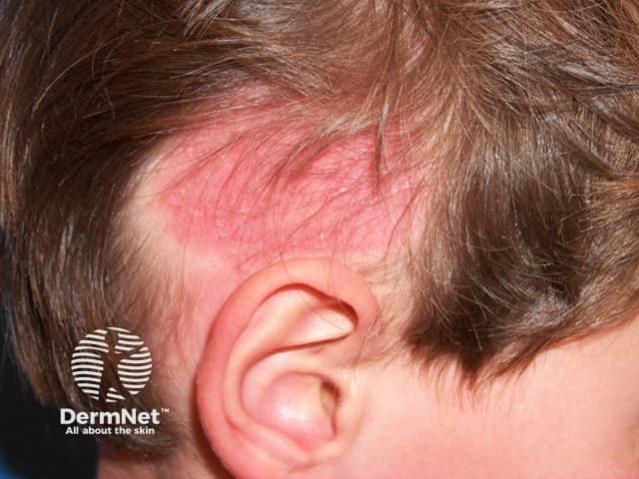
A photo of scalp ringworm in a child.
Source: DermNet
Ringworm in the groin
Ringworm in the groin can cause an itchy, scaly rash. It often affects both sides of the groin.
Ringworm on the feet
Ringworm on the feet is also called athlete’s foot. It can cause itchy, dry or cracked skin, especially between the toes. It may not look like a ring.
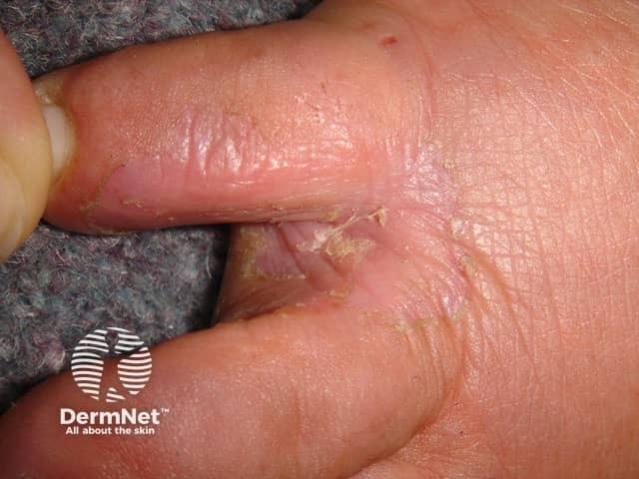
A photo of a fungal infection between a child’s toes.
Source: DermNet
Ringworm on the nails
Ringworm can make a nail thick, brittle or discoloured.
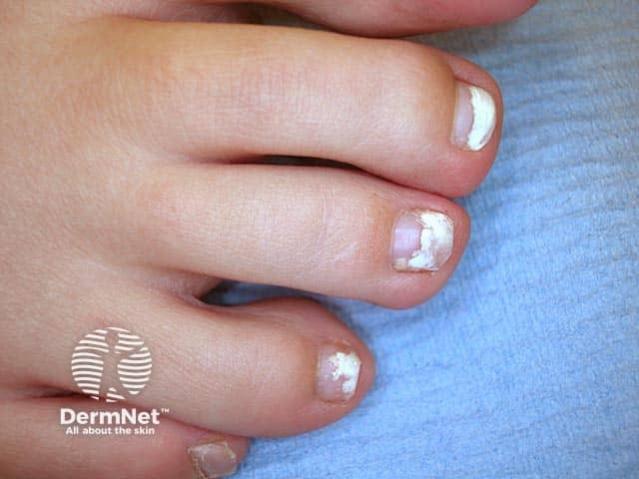
A photo of a fungal toenail infection in a child.
Source: DermNet
Managing ringworm
Ringworm needs treatment with an antifungal medicine.
Antifungal medicines come as creams, lotions, powders, sprays or gels. You can buy many of these from a pharmacy. Talk to a pharmacist about the right treatment for your child.
Follow the instructions on the medicine carefully. If you are using an antifungal cream, keep applying it for 1 week after the rash disappears. This helps clear the fungus and stops the ringworm from coming back.
Ringworm on the scalp or nails usually needs medicine taken by mouth. A health professional will need to prescribe this.
If scalp ringworm causes hair loss, the hair may take a few months to grow back.
Caring for your child’s skin
While the ringworm is clearing:
- keep your child’s skin clean and dry
- discourage your child from scratching the rash
- place a cool cloth over the rash if it feels itchy
Preventing ringworm from spreading
To help stop ringworm from spreading:
- cover the rash with clothing or a dressing
- make sure everyone washes and dries their hands regularly, especially after touching or treating the rash
- keep skin folds and the spaces between the toes clean and dry
- do not share towels, clothing or bedding and wash these items regularly
- encourage your child to wear footwear in shared showers and changing rooms
- check others in your household for ringworm
- ask a vet to check your pet for ringworm
When to get medical help for ringworm
Call Healthline on 0800 611 116 for free health advice or see a health professional if:
- the ringworm affects your child’s scalp or nails
- your child has several patches of ringworm
- the rash is painful
- the rash continues to spread after treatment starts
- your child develops bald patches
See a health professional urgently if:
- your child’s skin becomes swollen, warm or starts leaking fluid or pus
- your child has a fever or you’re worried
School and childcare
Your child can continue going to school or childcare.
Cover the rash with clothing or a dressing. Encourage your child not to share personal items, such as towels, hats or brushes.
