

Nasogastric (NG) tubes and nasojejunal (NJ) tubes
Nasogastric (NG) and nasojejunal (NJ) tubes are both nasal tubes. An NG tube ends in the stomach, an NJ tube ends in the intestine. They are a temporary way of feeding your child.
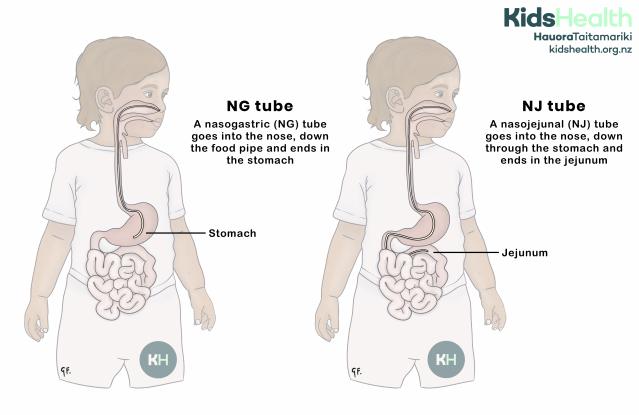
An illustration showing an NG tube ending in the stomach and an NJ tube passing through the stomach and ending in the jejunum.
Source: KidsHealth
transcribeTranscript
This illustration compares two types of nasal feeding tubes.
- On the left, an NG tube (nasogastric tube) goes into the nose, down the food pipe, and ends in the stomach.
- On the right, an NJ tube (nasojejunal tube) goes into the nose, passes through the stomach, and ends in the jejunum, which is part of the small intestine.
At the top of the illustration is the KidsHealth logo with the website: kidshealth.org.nz.
A health professional can teach you how to replace the tube at home.
Tips from families on taping NG or NJ tubes
- tape the tube in place from nose to ear - make sure there is no tube exposed so little fingers can flick it out
- use 'remove wipes' to take off the tape and soak the plaster for 30 seconds before changing it
- change the tape daily
- never tape in the same position
- wrap your baby to keep them still and have one adult hold their head while another adult puts the tape on
We found that taping my son's NG tube with strapping tape halved (width) was most secure and we taped it by looping it around the tube then up onto his nose once he was able to get it off his cheek so easily, this also rested the skin on his cheeks.
Other tips on NG or NJ tubes
- choose clothes with a button, snap or loop label at the back of the neck
- thread the tube through a few times to stop it getting in the way
- if you think your child may vomit, lower the tube so the formula comes up out of the stomach
- use specific containers to dry, drain and store tubes and other equipment
- keep them away from other dishes
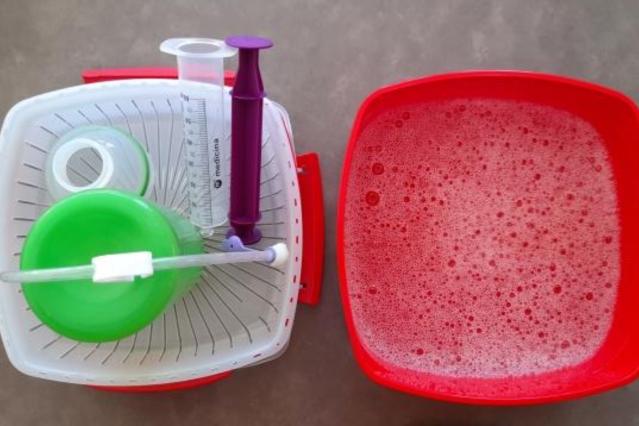
Washing and drying tube feeding equipment.
Source: KidsHealth
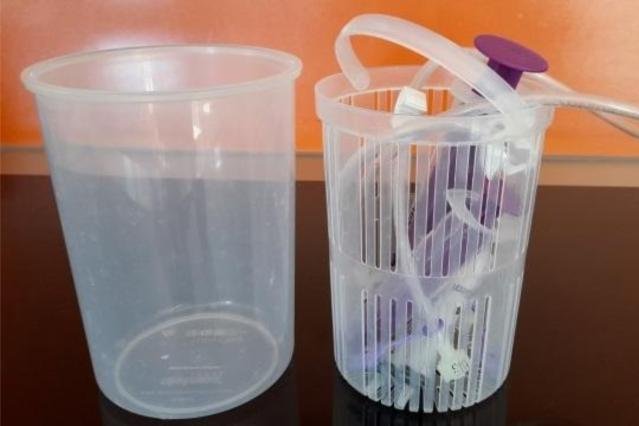
Drying tube feeding equipment.
Source: KidsHealth
Gastrostomy tubes
A gastrostomy tube goes directly into your child's stomach from the skin of your child's tummy. A doctor may put the tube in during an operation, or by a procedure called endoscopy.
Types of gastrostomy tubes include:
- retention disk PEG
- PEG-J
- balloon gastrostomy
- Mic-Key button
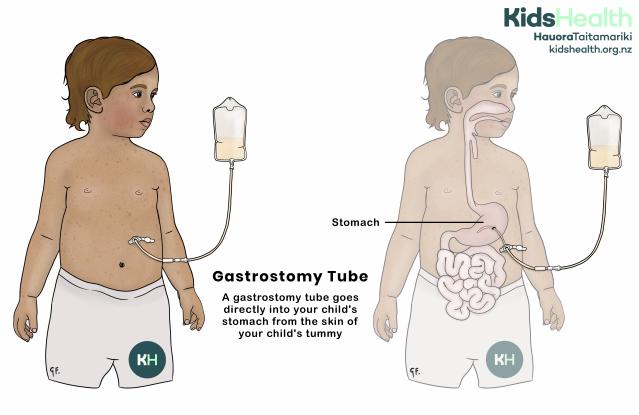
An illustration showing a child with a gastrostomy tube going directly into the stomach through the tummy, with a feeding bag attached.
Source: KidsHealth
transcribeTranscript
This illustration shows a child with a gastrostomy tube.
- The tube goes directly into the child’s stomach through an opening in the skin of the tummy.
- A feeding bag is attached to the tube outside the body to give milk or liquid food.
At the top of the illustration is the KidsHealth logo with the website: kidshealth.org.nz.
Tips from families on looking after your child's gastrostomy tube and tummy
- patches, covers and protectors help hold the Mic-Key in place
- patches and covers also keep the stomach clean and prevent hyper granulation tissue
- use baby oil to wipe off sticky patches, then wipe dry before adding another tape
- wrap the stomach/button in stretchy fabric with cotton wool protection when going out to play
- ask your homecare nurse for dressings for sore Mic-Key sites
- experiment with tape to find one which best works for you
Tips from families on bedding and spills
You won’t always be able to avoid spills, but there are some things you can do to make cleaning them easier.
- use plastic sheets or protectors under bed sheets to help protect the mattress
- use a waterproof pillow case under a regular one
- use traditional cloth nappies over clothes and cot sheets so they are easy to change if your pēpi vomits
- raise the top bed end with a stable base that will not move or slip
- play on a mat with a plastic backing, such as a picnic rug, to protect your floors
- have a bucket available in every room and in the car if your child is likely to vomit
- always check you have closed the port before feeding - don't assume it's closed
As they get older use a second bed protector like Brolly sheet - they are FANTASTIC. It's an investment, but when a leak happens, you don't have to strip the entire bed.
Moving From Tube Feeding To Oral Feeding
Tips from families on going out
There are things you can do to help make it easier when you go out with your child.
- take spare clothes, feeding tubes and extra formula
- adapt a backpack using velcro to hold tubes
- label your young child’s backpack with a note warning a feeding pump is attached and it is not to be removed
- attach a hair tie about the bolus - then you can connect it to something high
- sew a velcro handle on to a bag with a hole in the bottom and attach it to prams and wheelchairs
- sistema bags are great for holding feeds and all your equipment
- hang an allergy alert on your child's bag

Alexander carries his continuous tube feeding equipment for a day out exploring the Rakaia Gorge Walkway.
Source: KidsHealth
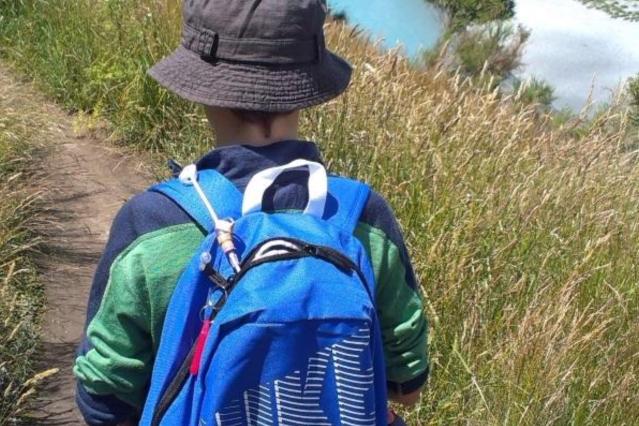
Alexander carries his tube feeding equipment in a backpack.
Source: KidsHealth
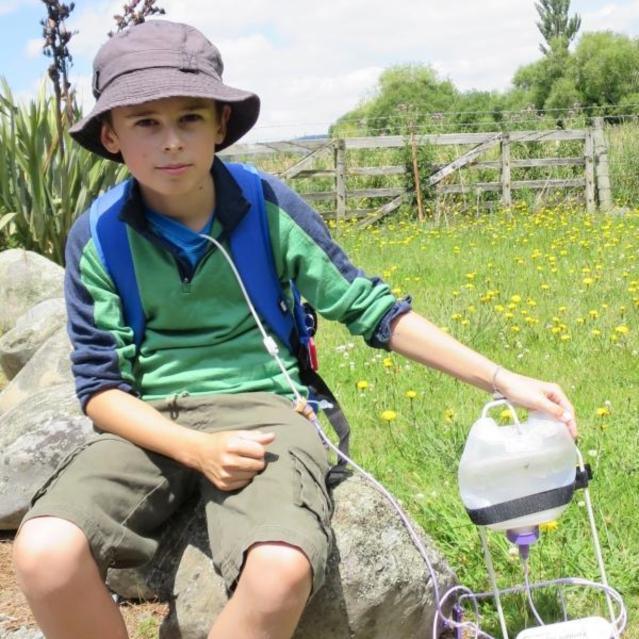
Alexander taking a break during the walk.
Source: KidsHealth
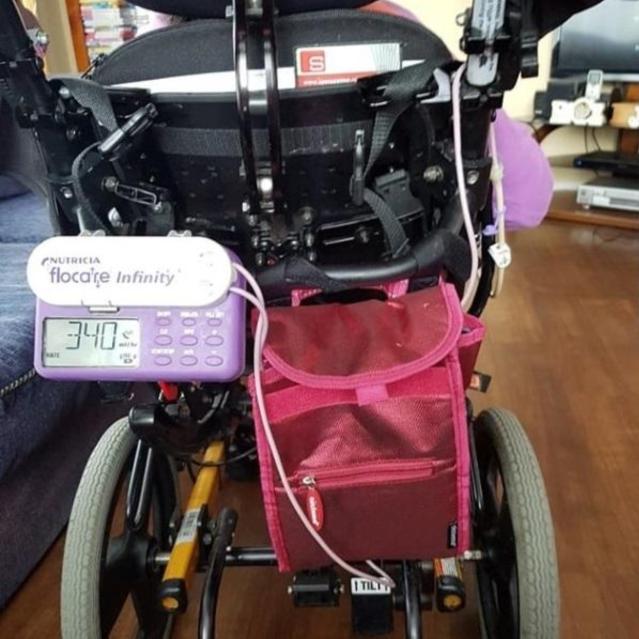
Adapting a bag to attach tube feeding equipment to a wheelchair.
Source: KidsHealth
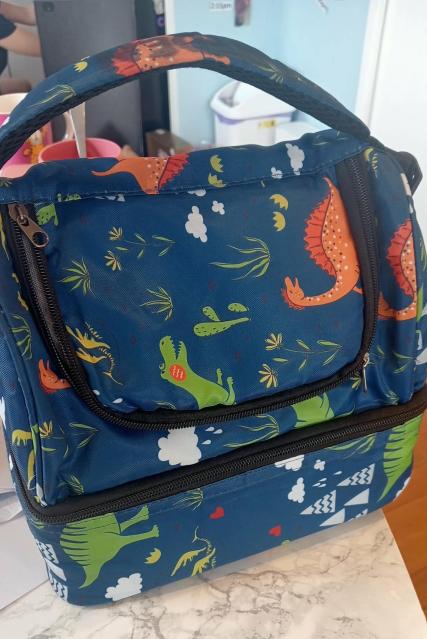
An insulated cooler bag used to store and carry tube feeding supplies.
Source: KidsHealth
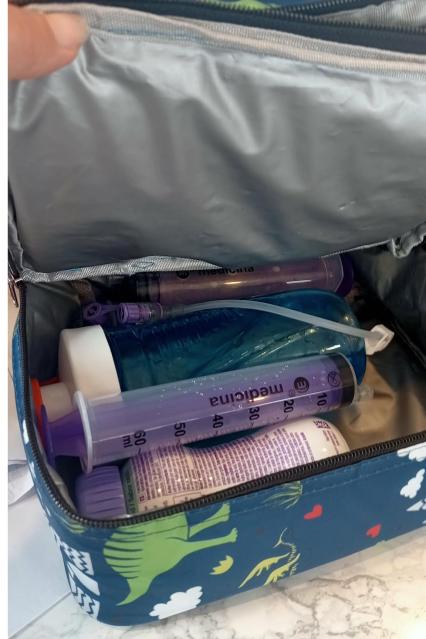
An open cooler bag showing tube feeding supplies.
Source: KidsHealth
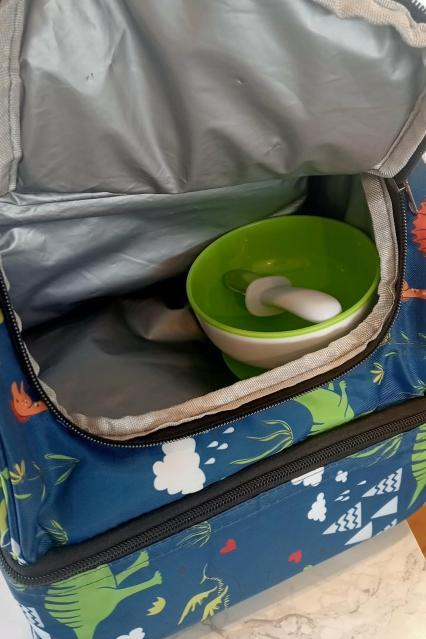
An open cooler bag containing tube feeding supplies and utensils.
Source: KidsHealth
Other tips and tricks
Keep it normal
We make sure we do lots of kisses, blow raspberries and have tickles on the side of the face that has the tube. We find that it helps keeps the area normal, as that is what we do on the other side of the face too!
Involve your child
My son is only 2 and a half years. Letting him be involved in learning to care for his tube has been a huge help and has also helped him to become more familiar with it. He loves flushing it with water and he has even nick named it, tubie!
Teach others
We photographed each stage of feeding to take as a guide for school, with notes on preparation and cleaning. We then laminated the two pages and added a string loop for hanging up.
Get a dietitian to help
There are different formulas, alternatives to milk, even food blends. Get a dietitian involved.
Encourage oral stimulation
Whenever I fed her, I encouraged oral stimulation so her mouth was always busy. Ask your nurse what to use to avoid oral aversion.
Don't be afraid to ask questions
If you aren't sure, ask. And if you still aren't sure, keep asking.
Use wall cable holders to hang tubes
A little life hack for those trying to stay somewhat organised with all the tube gear. I find these stick to the wall cable holders great for hanging the tubes. I got mine from Bunnings.
Take care of yourself
Other parents of tube-feeding tamariki (children) say it's important to remind yourself you're doing a great job in a very difficult situation and to "hang on in there" as it can be a really hard journey.
Get out of the house and be kind to yourself. Tube feeding is one of the toughest things you'll ever do. But you've got this.
More information and support
Tube Feeding Stories - Parent Journeys
A New Zealand Facebook group for families that have a tube-fed child (or have had a tube-fed child at some stage). Please remember that this Facebook group is not moderated by health professionals. The advice is often from parents or members of the public. Before making changes to your child's feeding regime, talk with your child's healthcare team.
Acknowledgements
The content on this page is based on a consumer survey. Brand names mentioned are personal suggestions.
Sarah Vane, a mother of a tube-fed child and a consumer representative of the New Zealand Clinical Network for Paediatric Tube Feeding Clinical Reference Group, researched and wrote the report.
It was developed and approved by the Clinical Network for Paediatric Tube Feeding, Paediatric Society of New Zealand | Te Kāhui Mātai Arotamariki o Aotearoa.
