

A video about brushing teeth with your baby.
Source: New Zealand Dental Association
What you need to know about your baby's teeth
Teeth start forming in the womb and most pēpi are born with a full set of 20 baby teeth, usually hidden under their gums.
Babies' teeth usually start to appear between 6 to 10 months. Some pēpi are born with teeth showing above the gums and may take longer.
It's important you take care of your baby's teeth as healthy baby teeth are needed for chewing and proper speech development.
What is teething?
Teething is when your baby's teeth come through the gums. While most pēpi are born with a full set of 20 teeth, they don't usually appear through the gums until between 6 to 10 months.
The lower (bottom) front teeth usually come through the gum first. These are followed by the upper (top) front teeth.
The bottom front teeth come through at 6 to 10 months, and the top front teeth at 8 to 12 months. Then, the top teeth on either side at 9 to 13 months, and the bottom teeth on either side at 10 to 16 months. The first top molar teeth come in at 13 to 19 months. The first bottom molars come in at 14 to 18 months. Then the top canines at 16 to 22 months and the bottom canines at 17 to 23 months. The last bottom molars come through at 23 to 31 months, and the last top molars at 25 to 33 months.
Many babies' teeth come through without any problems, but for some the gums swell and become tender as teeth break through.
Signs and symptoms of teething
A baby who is teething may:
- cry
- have a slight fever
- have red cheeks
- drool
- not eat or sleep well
- want to bite something hard
How to help your teething baby
The following may help your baby if they are upset:
- give your baby something to chew on, such as a clean teething ring
- rub some teething gel on their gums, especially before feeding
Call Healthline on 0800 611 116 or see a dentist or another health professional if your baby has:
- a lot of pain
- bleeding or pus in their gums
- swelling in the mouth or face
- a fever that doesn’t settle
Healthline is available 24 hours a day, 7 days a week on 0800 611 116. Call Healthline if you need advice about a child of any age who is unwell, hurt, or has any symptoms of sickness. It's free to callers throughout New Zealand, including from a mobile phone.
Find out how to care for your preschooler's teeth.
Caring For Your Child's Teeth: 1 To 5 Years
How to care for your baby's teeth in 5 steps
Healthy teeth = a healthy smile.
Follow these 5 steps to protect your baby's smile.
Brush teeth twice a day.
Use fluoride toothpaste.
Have regular dental check-ups.
Lift the lip every month to check for signs of tooth decay (holes).
Choose healthy foods and drinks.
Brush teeth twice a day
Your baby will start getting their first teeth at around 6 months. These first teeth will help your baby to eat and speak well. Healthy baby teeth usually mean healthy adult teeth too, so it's important that you look after your baby's first teeth.
You can start cleaning your baby's teeth before they show by gently wiping their gums with a clean, damp facecloth or gauze wrapped around your finger. This helps your baby get used to you touching their teeth and gums.
As soon as your baby's teeth start to show, start brushing. Use a small, soft brush and a half-pea size amount of regular-strength fluoride toothpaste twice a day. One brushing should be at night before your baby goes to bed.
Tips for brushing your baby's teeth
Some tips for brushing your baby's teeth:
- hold your baby in a position where you can see their mouth and where they feel secure
- cup their chin in your hands and rest their head against your body
- clean their teeth using gentle circular motions
- lift their lips to brush the front and back of the teeth and at the gum line
- when finished, rinse the toothbrush and store it in an upright position so it can air-dry - make sure it's not touching other toothbrushes as that can cause germs to move from one brush to another
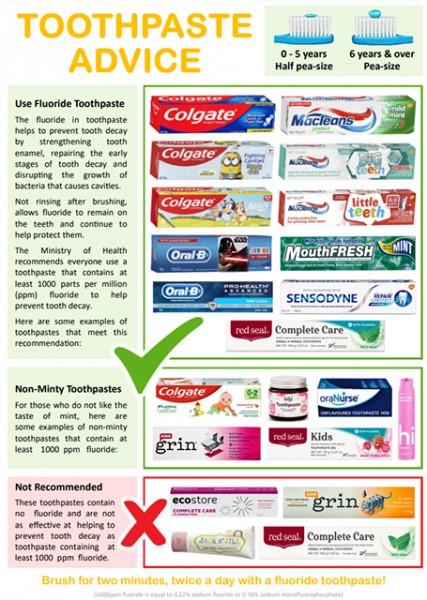
See the toothpaste advice chart from the Bee Healthy Regional Dental Service on which toothpaste to use, which ones to avoid, and how much to use.
A video about how parents make sure they brush their children's teeth twice a day.
Source: Dental Health Services Victoria, Australia
Use fluoride toothpaste
Fluoride makes teeth stronger and reduces tooth decay (holes). Use a 1000 parts per million (ppm) regular-strength fluoride toothpaste for your baby's teeth. For example, the Colgate Kids 0-2 years baby toothpaste.
Fluoridation For Preventing & Reducing Tooth Decay
Regular dental check-ups
Oral healthcare is free for all tamariki (children) until they turn 18. Enrol your baby with the service as early as possible, so that you can arrange the first check-up. Regular check-ups increase the chances of finding and treating any tooth decay early. To enrol your baby with a service or to make an appointment, phone 0800 TALK TEETH (0800 825 583).
Lift the lip every month
Gently lift your baby's top lip once a month to check inside their mouth. It’s a quick and easy way to see if tooth decay is present.
If you are worried about your baby's teeth, talk with your Well Child Tamariki Ora nurse at the next visit, or with a health professional or contact your Community Oral Health Service.

Visit the Plunket website to learn more about tooth decay and what to look for.
Choose healthy foods and drinks
It’s best to exclusively breastfeed your baby for the first 6 months of their life and continue to breastfeed until they are at least 1 year of age.
Don't put your baby to bed with a bottle. Going to sleep with a bottle of milk, a warm chocolate drink or juice will start to cause tooth decay. If they want to suck on something to settle themselves, it's better to use a dummy (pacifier).
Your baby may be ready to start eating solid food at around 6 months of age. To protect your baby's teeth, choose healthy foods and drinks. Sweet drinks, foods and fruit juices can cause tooth decay and cause your baby to develop a taste for sweet foods.
More information

For tips on reducing the amount of sugar in your baby's food and drink, see the section on the UK NHS website about preventing tooth decay by cutting down on sugar.

See the resources section of the NZ Dental Association website for more information and free downloadable resources.
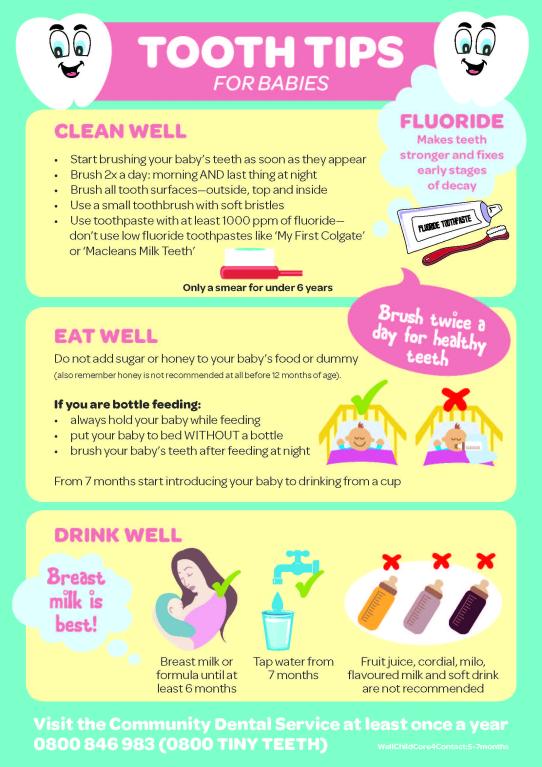
Check out the tooth tips for babies poster (PDF, 110 KB) on the community and public health website.
Acknowledgements
This page has been reproduced from the pregnancy and kids section of the Ministry of Health's website, the newborn to 3 months and 4 to 12 months section on the Plunket website and the New Zealand Dental Association website.
