

Key points about hay fever in children
- hay fever is also called allergic rhinitis
- it happens when your child’s immune system reacts to allergens in the air
- common triggers include pollen, dust mites, mould and animal fur
- hay fever doesn't spread from person to person
- symptoms can include a blocked or runny nose, sneezing, and itchy eyes, nose or throat
- treatment can help control symptoms
What is hay fever?
Hay fever is an allergic condition that can affect the nose, eyes and sometimes the throat. The medical term for hay fever is allergic rhinitis.
Hay fever happens when your child breathes in something they are allergic to. Their immune system reacts, causing allergy symptoms.
Some tamariki have hay fever only at certain times of the year, such as spring or summer. Other tamariki have symptoms all year round.
Causes of hay fever in children
Hay fever happens when your child is allergic to airborne allergens. Common triggers include:
- pollen from grass, trees, weeds or flowers
- house dust mites
- mould spores
- animal fur
Your child may be more likely to have hay fever if:
- they have asthma or eczema
- other members of your whānau (family) have allergies, asthma or eczema
Symptoms of hay fever in children
Hay fever symptoms can range from mild to severe. They may come and go and last for weeks or months.
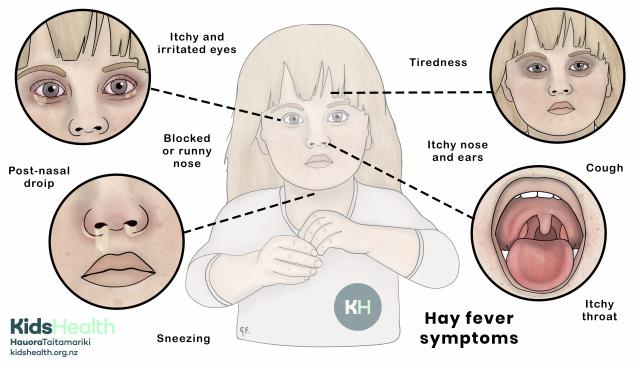
An illustration showing common hay fever symptoms in a child.
Source: KidsHealth
transcribeTranscript
This illustration shows a child in the centre with several close-up circles highlighting different hay fever symptoms, each linked with dotted lines.
On the left side:
- A close-up of the eyes shows redness and watering. The label reads itchy and irritated eyes.
- Below this, a close-up of the nose shows mucus dripping from the nostrils. The label reads blocked or runny nose.
- Near the centre of the face, a label points to the nose and reads post-nasal drip.
- At the bottom centre, a label reads sneezing.
On the right side:
- A close-up of the face shows dark shading under the eyes. The label reads tiredness.
- A label pointing to the nose and ears reads itchy nose and ears.
- A close-up of an open mouth shows the throat. The labels read itchy throat.
- At the centre, a label reads cough.
At the bottom left of the illustration is the KidsHealth logo with the text: kidshealth.org.nz.
Common symptoms include:
- a blocked or runny nose
- sneezing
- an itchy nose, throat or ears
- itchy, red or watery eyes
- rubbing the nose or eyes a lot
- post-nasal drip where snot drips from the nose down the back of the throat
- coughing
- clearing the throat a lot
Some tamariki may also:
- feel tired
- have trouble sleeping
- find it hard to concentrate at school
Hay fever does not usually cause a fever.
Some tamariki only get symptoms that affect their eyes. See the page on allergic conjunctivitis to learn more.
Allergic Conjunctivitis In Children
Diagnosing hay fever in children
A health professional usually diagnoses hay fever by:
- asking about your child’s symptoms
- asking when symptoms happen and what seems to trigger them
- checking your child’s ears, nose, throat and eyes
Most tamariki do not need allergy tests.
Managing hay fever in children
Managing hay fever usually involves avoiding triggers where possible, and using medicines.
Medicine
Medicine that may help hay fever symptoms include:
- antihistamine tablets or liquid to reduce sneezing, itching and a runny nose
- steroid nasal sprays to reduce swelling and inflammation in the nose
- eye drops for itchy or watery eyes
A health professional will help you find the right treatment for your child’s age and symptoms.
Avoid giving decongestant medicine to tamariki unless your health professional advises this. They can cause side effects like fast heart rate and poor sleep.
Helping manage your child’s hay fever at home
You can help manage your child’s hay fever by reducing exposure to triggers.
Helpful steps include:
- washing your child’s face and hands after being outside
- using dust mite covers on pillows and mattresses
- washing bedding regularly in hot water
- keeping pets out of your child’s bedroom
Acknowledgements
Illustration by Dr Greta File. Property of KidsHealth.
