

Key points about healthy food ideas for children and young people
- tamariki and rangatahi need a variety of foods to grow and stay well
- nutritious food supports growth, wellbeing, and maintaining a healthy weight
- limit foods high in fat, sugar or salt
Why healthy eating is important for children
Tamariki and rangatahi need a variety of healthy foods. Healthy food helps support their growth and development. Eating well helps tamariki have enough energy for physical activity, play and learning.
Healthy eating also helps maintain a healthy weight and lowers the risk of health problems later in life. Eating regular meals can help support mood and overall wellbeing.
What makes up a balanced diet for children?
Tamariki and rangatahi need to eat a range of different foods each day to get the nutrients they need to grow and thrive. The 4 main food groups provide carbohydrates, protein, fats, vitamins, and minerals. Tamariki and rangatahi need food from each of these groups every day.
The 4 main food groups are:
- vegetables and fruit - aiming for variety in type and colour
- grain foods - mostly wholegrain, such as breads, cereals, rice and pasta
- milk and milk products - such as yoghurt and cheese, or calcium-fortified alternatives
- protein foods - such as legumes, nuts* and seeds, seafood, eggs, chicken and lean meats
*Nuts are a choking hazard - use peanut butter or other nut spreads for tamariki under 5.
See the page on healthy eating to learn more about balanced meals.
Healthy Eating For Children & Young People
Healthy breakfast ideas
Eating breakfast helps tamariki and rangatahi start the day well. Breakfast provides energy for learning, playing, and being active. Eating breakfast regularly can also help support a healthy weight.
Healthy breakfast ideas include:
- breakfast wheat biscuits with milk and fruit
- scrambled eggs with sliced tomato on toast
- mashed banana on toast with a glass of milk
- porridge with milk and grated apple, chopped banana, or frozen berries
- toast with peanut butter and a glass of milk
- leftover rice with vegetables and a glass of milk
- baked beans on toast and a glass of milk
Offer your child fruit rather than fruit juice whenever possible.
Choosing a breakfast cereal
Some breakfast cereals are high in sugar or fat. Check the nutrition information label on the back of the package (see below). Porridge and breakfast wheat biscuits are good choices.
Aim for cereals with:
- less than 10 grams fat per 100 grams
- less than 10 grams sugar per 100 grams
- more than 5 grams fibre per 100 grams

You can learn more about reading food labels on the Ministry for Primary Industries website.
Check out the recipes section for some easy and fun breakfast ideas. Or go straight to one of the breakfast recipes below.
Healthy lunch ideas
A healthy lunch gives tamariki and rangatahi the energy and nutrients they need to play and learn well. Involve your child in choosing and making lunches. This will make them more likely to eat and enjoy their lunch.
Aim to include a variety of foods from each of the food groups: fruit or vegetables, grain foods (carbohydrates), milk products and protein foods.
Fruit and vegetables
Fruit and vegetables provide fibre, vitamins, and minerals. Offer vegetables cut into manageable pieces, such as carrot, cucumber, or celery sticks. Fruit that fits easily into a lunchbox includes mandarins, small apples, and grapes.
Buying fruit and vegetables in season can help keep costs down.
Offer your child fruit rather than fruit juice.
Carbohydrates
Grain foods provide energy and help your child feel full. Choose high-fibre and wholegrain options such as grainy bread. You can also use wraps, flatbreads, pita bread, grainy rolls, or crackers.
Milk products
Milk products provide calcium, which helps build strong bones and teeth. Cheese slices and yoghurt are good lunchbox snacks.
Protein
Protein comes from milk and milk products, as well as lean meat, chicken, fish, eggs, nuts, and legumes. These foods support growth and provide important nutrients such as iron and magnesium. Peanut butter, chicken, tuna, eggs, or hummus make great sandwich fillings.
Check out the Heart Foundation website for some healthy lunch recipes.
Check out the recipes section for some easy and fun lunch ideas. Or go straight to one of the lunch recipes below.
Healthy dinner ideas
The healthy plate model is a useful guide for family meals. Aim for:
- plenty of vegetables (½ the plate)
- protein (¼ of the plate)
- wholegrain or starchy foods (¼ of the plate)
Try to include more vegetables than protein on the plate.
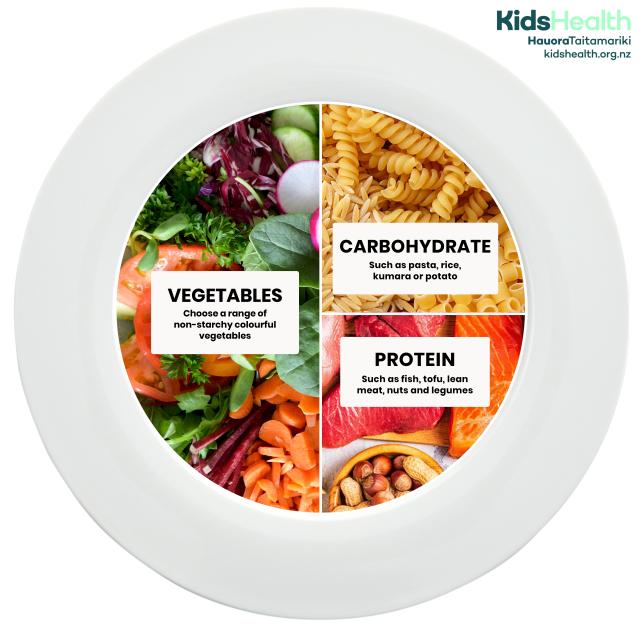
A plate showing suggested portions of food for a healthy balanced meal. Aim for ½ a plate of non-starchy colour vegetables, ¼ of a plate of protein and ¼ of a plate of carbohydrates.
Source: KidsHealth
transcribeTranscript
The illustration shows a dinner plate divided into 3 sections.
The largest section takes up half of the plate and is labelled: VEGETABLES - Choose a range of non-starchy colourful vegetables.
This section is illustrated with vegetables including leafy greens, tomatoes, carrots, beetroot, cucumber and radishes.
The top right quarter of the plate is labelled: CARBOHYDRATE - Such as pasta, rice, kumara or potato.
This section is illustrated with pasta and rice.
The bottom right quarter of the plate is labelled: PROTEIN - Such as fish, tofu, lean meat, nuts and legumes.
This section is illustrated with salmon, lean meat and nuts.
At the top right is the KidsHealth logo with the website: kidshealth.org.nz.
You can add extra vegetables to meals by grating or finely chopping them into dishes. Try this with meals such as pizza, pasta, curries, burgers, and casseroles. This can make meals more nutritious and help them go further.
Check out some healthy dinner ideas from the Heart Foundation, including:
You can also check out the recipes section for some easy and fun dinner ideas. Or go straight to one of the dinner recipes below.
Healthy snack ideas
Think of snacks as mini-meals that provide energy and nutrients between meals. Many tamariki need snacks mid-morning and mid-afternoon. Older tamariki and rangatahi may also need a snack after dinner during growth spurts.
Think about the timing and size of snacks so they do not affect your child's appetite for their main meals.
Aim to provide snacks and drinks that are low in fat, sugar and salt. Healthy snack ideas include:
- fruit
- vegetable sticks with a low-fat dip such as hummus
- seeds and nuts*
- plain popcorn
- fruit or plain unsweetened yoghurt
- mini sandwiches
- unsweetened breakfast cereal with milk
*Nuts are a choking hazard - use peanut butter or other nut spreads for tamariki under 5. Peanut butter and other nut spreads are OK from age 6 months.
Checklist For Preventing Your Baby From Choking
You can also check out the recipes section for some easy and fun snack ideas. Or go straight to one of the snack recipes below.
Healthier takeaway options
Most takeaway foods are high in fat and salt, so it’s best to limit takeaways. Lower-fat options include:
- sushi
- kebabs and wraps
- pizza with more vegetables than cheese
- pasta with tomato-based sauces
- rice or noodle dishes with lots of vegetables (not fried)
- baked potatoes with meat or beans and salad
Healthy home-made alternatives to takeaways
Takeaways can be tempting when time or energy is low. With a few basic pantry and fridge items, you can often make a quick, healthy meal at home in the same amount of time.
Some ideas include:
- pita-bread pizzas topped with tomato paste, vegetables, and cheese
- a quick pasta dish using a prepared sauce, tuna, and frozen vegetables
Foods to limit
Tamariki need a balanced diet to help them grow and thrive. It's OK to have foods that are high in fat, sugar, or salt occasionally, such as less than once a week. These foods are not needed every day.
Eating too much of these foods can affect health over time.
Examples include:
- muesli bars
- lollies and sweets
- fruit leathers and roll-ups
- potato chips
- chocolate
- biscuits
- sausage rolls and meat pies
- takeaways
- soft drinks
More recipe ideas
Check out the recipe section to find lots of easy and nutritious meals for your whole whānau.
The Heart Foundation website has heart healthy recipes. Check the website to help inspire new meal ideas for you and your whānau.

The Healthy Food Guide website has lots of healthy recipes. Visit the website for recipes for healthy meals and snacks.
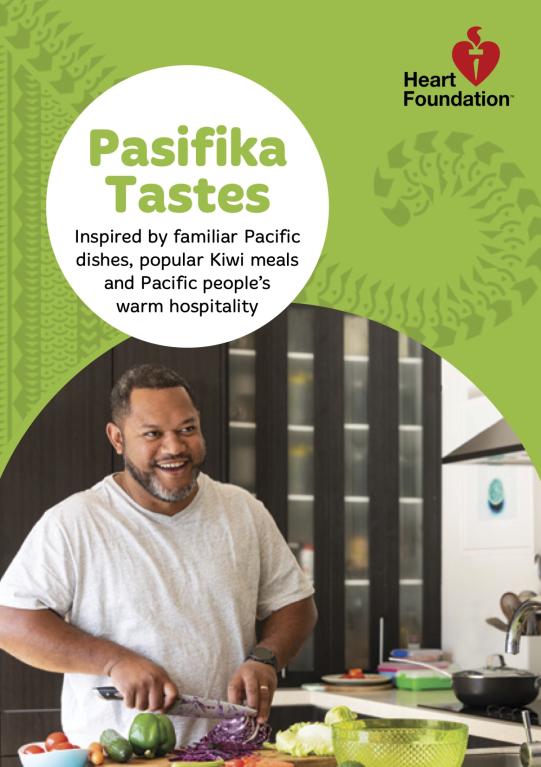
Source: Heart Foundation
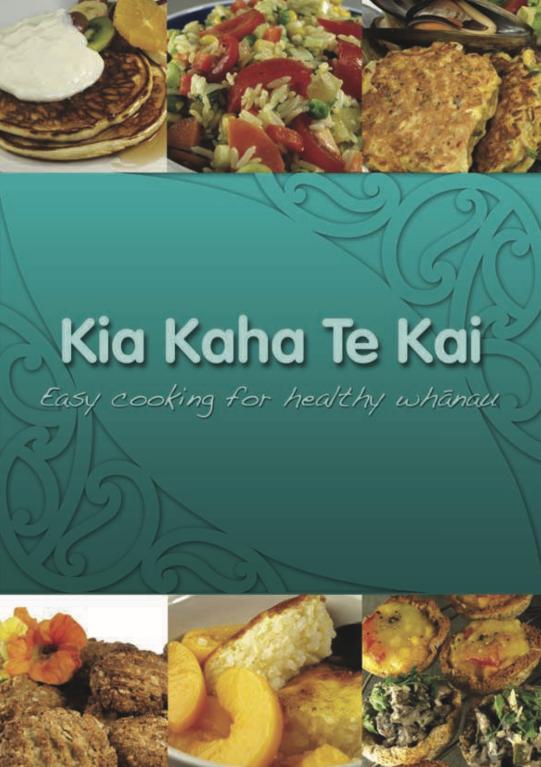
Source: Te Korowai o Hauora Hauraki
