

Key points about hives
- hives are red, itchy, raised spots on the skin
- hives are common in tamariki
- the most common causes of hives are infection or an allergic reaction, but sometimes the cause is not known
- most often, hives will disappear within a few hours to a day, often without treatment
- hives can be one sign of anaphylaxis, which means a severe allergic reaction - if you think your child is having a severe allergic reaction, call 111 and ask for urgent medical help
What are hives?
Hives are sometimes called urticaria, welts or wheals. They are red, raised, itchy spots that appear suddenly on the skin. There is often a white bump in the centre of a hive, like a mosquito bite.
Causes of hives
Common causes of hives include allergic reactions, infection and environmental factors. Sometimes there is no obvious reason why tamariki get hives.
Allergic reaction
Some tamariki can get hives when they have an allergic reaction. Common allergens include foods, medicines, insect stings, or animals.
Hives can occur as part of a more severe allergic reaction called anaphylaxis. Other signs of anaphylaxis include:
- cough
- wheeze - a noisy type of breathing
- tongue swelling
- becoming pale and floppy
- becoming faint and dizzy
Learn more about signs and symptoms on the anaphylaxis page.
Infection
Some tamariki can get hives when they have an infection, such as a cold or a tummy bug (gastroenteritis).
Physical factors
Physical factors such as cold water or tight, scratchy clothing can cause hives. Some tamariki develop hives when they get too hot.
Symptoms of hives
Hives are red, raised, itchy spots. In tamariki with darker skin, the spots may look more brown or purple in colour.
Hives can occur anywhere on the body. Sometimes hives join together to make bigger spots.
Hives are usually very itchy. Some tamariki may also feel a burning sensation on their skin when they have hives.
Some tamariki might get swelling at the same time as hives, especially around the eyelids and mouth.
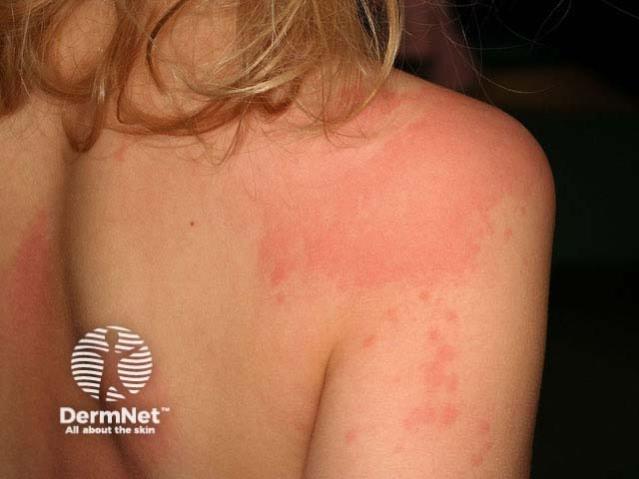
A child with hives over their back and shoulder.
Source: DermNet
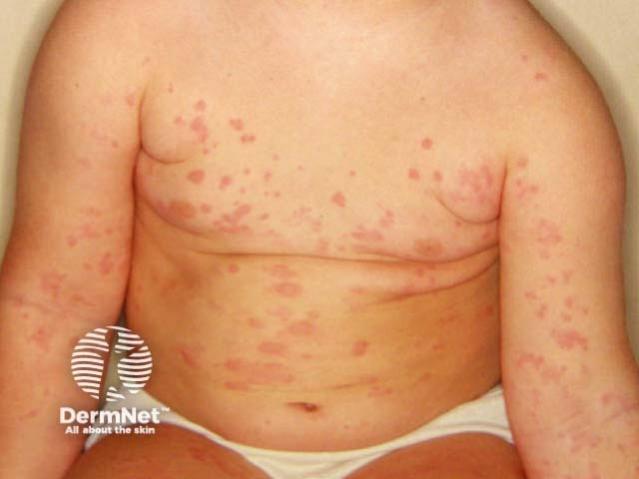
A child with hives over their stomach, chest and arms.
Source: DermNet
How long do hives last?
Once hives appear, they can last for a few minutes up to 24 hours. Sometimes they can keep coming back for several weeks. If they come back, they may show up on a different part of the body.
Chronic urticaria
Chronic urticaria means hives have been happening most days for more than 6 weeks. Chronic urticaria can last for months or years. In tamariki, there is often no known cause. Chronic hives are less common in tamariki than in adults.
Antihistamines
Antihistamines can help reduce itch and swelling. Some are suitable for tamariki over 6 months of age. A health professional may prescribe an antihistamine, or you can check with your pharmacist about options for your child.
When to get medical help for your child
If your child has a rash and you are unsure what is causing it, take them to a health professional. See a health professional urgently if your child is unwell or if there is bruising or purple skin discolouration with the rash.
See a health professional if your child has hives:
- that are possibly due to an allergic reaction
- that have been happening on and off for more than 6 weeks
- that are itchy, uncomfortable or stopping your child from sleeping
- that are not getting better with antihistamines
If your child has a brief period of hives but they are otherwise well and the hives settle with a cold compress or antihistamine, then they can be looked after at home.
See the page about anaphylaxis to learn about the signs and what to do.
