

Key points about rheumatic heart disease
- rheumatic heart disease happens when rheumatic fever causes damage to the heart
- damaged heart valves may leak or become narrow, which affects how well the heart pumps
- tamariki (children) and rangatahi (young people) with rheumatic heart disease need regular check-ups
- some tamariki may need medicine or surgery to help their heart
- ongoing penicillin injections help protect against another episode of rheumatic fever
- getting rheumatic fever again can cause more damage to the heart
What is rheumatic heart disease?
Rheumatic heart disease happens when rheumatic fever damages one or more heart valves. The valves help blood flow in the right direction. When the valves become swollen or scarred, they may not open or close properly. This can make the heart work harder to pump blood around the body.
Some tamariki have mild valve damage and few symptoms. Others have more serious valve problems that need ongoing care or surgery.
Causes of rheumatic heart disease
Rheumatic heart disease starts with rheumatic fever. Rheumatic fever can develop after a strep throat infection that isn’t treated. The infection can trigger inflammation in the body. This inflammation can involve the heart and damage the heart valves. Inflammation can cause permanent scarring and long-term heart problems.
See the rheumatic fever page to learn more.
Rheumatic Fever In Children & Young People
A bit about the heart
The heart has 4 chambers and 4 valves. The chambers fill the heart with blood and the valves help the blood flow in one direction.
The 4 chambers are the:
- right atrium
- right ventricle
- left atrium
- left ventricle
Each atrium connects to its ventricle through a valve. Each ventricle also has a valve at its exit, where blood leaves the heart.
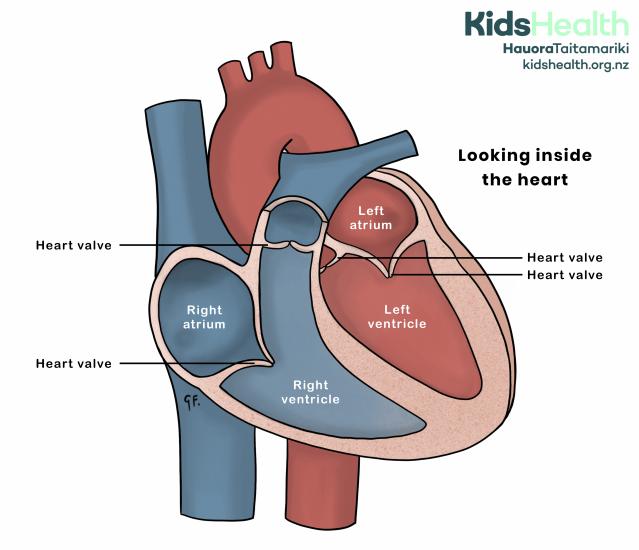
An illustration of the inside of the heart showing its four chambers and four heart valves.
Source: KidsHealth
transcribeTranscript
The illustration shows a cross-section of the heart with the four chambers and four heart valves.
The following anatomy labels appear on the illustration and are connected to the relevant part with a line:
- Right atrium
- Right ventricle
- Left atrium
- Left ventricle
- Heart valve (four valves are labelled)
The title 'Looking inside the heart' appears on the right side of the illustration.
At the top right is the KidsHealth logo with the website: kidshealth.org.nz.
Heart valves open and close as the heart beats. They help blood move in the right direction and stop it from flowing backwards.
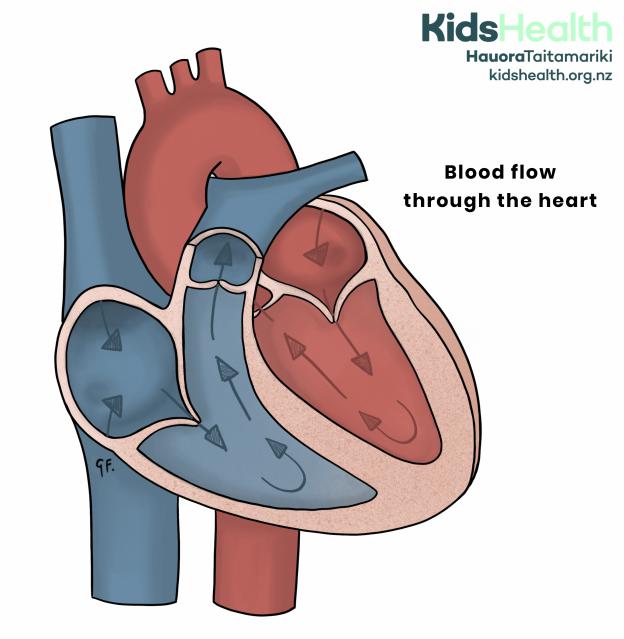
An illustration showing the direction of blood flow through the heart.
Source: KidsHealth
transcribeTranscript
The illustration shows a cross-section of the heart.
Blue arrows show the flow of oxygen-poor blood through the right side of the heart and to the lungs.
Red arrows show the flow of oxygen-rich blood through the left side of the heart and out to the rest of the body.
The title 'Blood flow through the heart' appears on the right side of the illustration.
At the top right is the KidsHealth logo with the website: kidshealth.org.nz.
How rheumatic fever affects the heart
Rheumatic fever can cause inflammation in the heart tissue and valves. Over time, this inflammation can scar the valves and make the heart beat more slowly. Scarred valves can leak, letting blood flow backward. They can also narrow, which means less blood can flow through.
Not everyone with rheumatic fever will get heart valve damage.
When the valves do not work well, the heart has to work harder. This can cause tiredness, shortness of breath and swelling in the legs.
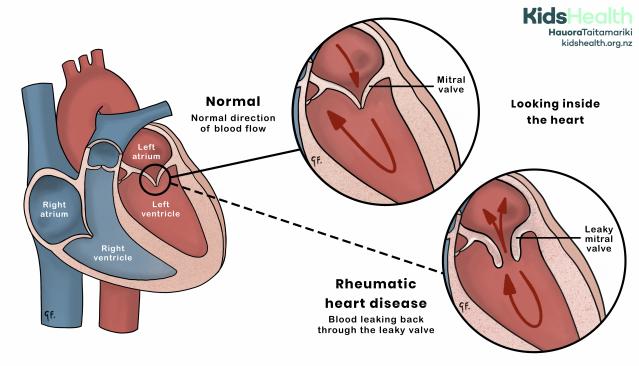
An illustration showing how rheumatic heart disease damages the mitral valve causing blood to leak backward.
Source: KidsHealth
transcribeTranscript
The illustration shows a cross-section of the heart with two detailed views comparing normal and abnormal blood flow.
On the left is the main heart diagram labelled Right atrium, Right ventricle, Left atrium, and Left ventricle. A small circle highlights the mitral valve between the left atrium and left ventricle.
A magnified view at the top right shows a Normal mitral valve with arrows indicating the normal direction of blood flow from the left atrium into the left ventricle.
A second magnified view below shows Rheumatic heart disease, where the damaged mitral valve allows blood to flow backward into the left atrium. Arrows show blood leaking back through the valve.
At the top right is the KidsHealth logo with the website: kidshealth.org.nz.
Symptoms of rheumatic heart disease
When rheumatic fever damages a heart valve, the heart cannot pump properly. Tamariki and rangatahi with rheumatic heart disease may feel:
- a lack of energy
- more short of breath than others when active
- chest discomfort
- short of breath when doing nothing
- breathless when lying flat
- the need for extra pillows to sleep comfortably
Some tamariki do not notice any symptoms at first. Some tamariki only find out they have rheumatic heart disease after a check-up or heart scan.
Check out a series of animated videos about rheumatic fever and the heart.
Rheumatic Fever Animated Videos
Diagnosing rheumatic heart disease
Your child’s health professional will ask about symptoms and examine your child. Some tamariki have a heart murmur, which is an extra sound that can happen when a valve leaks.
Your child may need:
- an ECG - a tracing of the heart’s activity
- blood tests
- a chest x-ray
- an echocardiogram
An echocardiogram is the main test to help diagnose rheumatic heart disease. An echocardiogram is an ultrasound scan of the heart. It shows how the valves open and close and how well the heart pumps.
Managing rheumatic heart disease
Regular check ups
Your child will need regular check-ups with their healthcare team. These visits help track how their heart is working and pick up any changes early. Your child will also have regular heart scans to check their valves and see how well the heart pumps.
Regular penicillin injections
Penicillin injections every 28 days protect your child from getting rheumatic fever again. Preventing another strep infection is key to protecting their heart from more damage.
Penicillin Injections After Rheumatic Fever
Medicine
Some tamariki need medicine to help the heart pump more strongly or to reduce fluid buildup. Your child’s healthcare team will explain what each medicine does and how it helps their heart.
Surgery
A small number of tamariki have severe valve damage. If the valves don’t work well, your child may need surgery to repair or replace them.
Looking after your child with rheumatic heart disease
Daily routines and rest
Your child may get tired more easily, so encourage a balance of activity and rest. Support them to take breaks when they need to. Your child’s healthcare team will give you advice about this.
Taking medicines
If your child needs medicines for their heart, make sure they take them exactly as prescribed. Help them stick to a routine. You can set reminders on your phone. Talk openly about how the medicines help protect your child’s heart.
Staying active
Gentle activity helps most tamariki feel better and stay strong. Your child’s healthcare team will let you know what level of activity is safe.
Healthy eating
Offer a healthy balanced diet with a range of foods. Good nutrition supports energy levels and overall health.
Healthy Eating For Children & Young People
Warm, dry, healthy housing
A warm, dry home helps protect your child from illness and supports their overall health. Good ventilation, insulation, heating and reducing dampness all help keep the home healthy.
Dental care
Good dental care is important to protect the heart. Sometimes germs from the mouth can enter the bloodstream during dental work. This can cause endocarditis, which is an infection in the heart valves.
Support your child to:
- use their own toothbrush
- brush twice a day with fluoride toothpaste
- reduce sweet food and drinks
- have regular dental checks
Let health professionals know
When to get medical help for your child
See a health professional
See a health professional if your child:
- has a sore throat
- becomes unusually tired
- develops joint pain or swelling
- is limping
- gets swelling in their legs
- feels breathless
- misses a penicillin injection
See a health professional urgently
See a health professional urgently if your child:
- has chest discomfort
- feels faint or dizzy
- becomes more breathless than usual
- develops a fast or irregular heartbeat
Call 111
Call 111 and ask for urgent medical help if your child:
- has severe trouble breathing
- becomes very unwell
- is hard to wake
- has sudden severe chest pain
More information
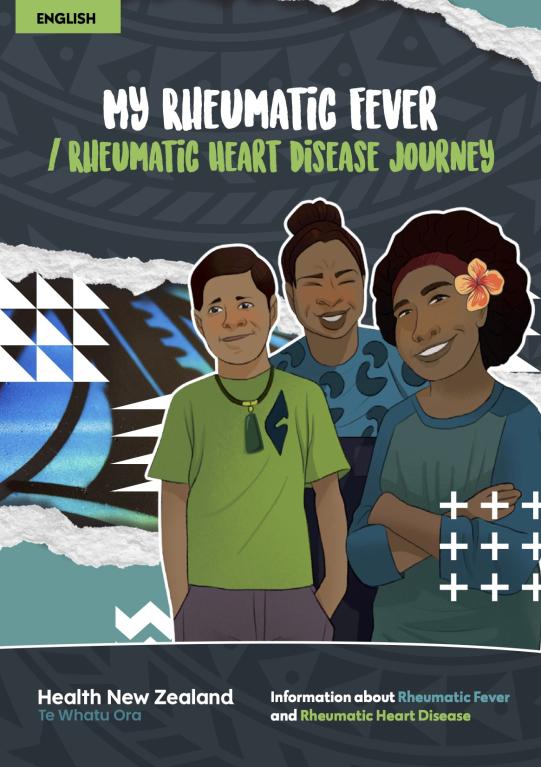
If your child has been diagnosed with rheumatic fever or rheumatic heart disease, there is some information to help you, your child and your whānau navigate the journey ahead.
Pū Manawa provides information and guidance on rheumatic fever and rheumatic heart disease from some of Aotearoa New Zealand's leading health experts. See their website for information, resources and whānau stories.

Heart Kids New Zealand supports Kiwi kids, teens and whānau impacted by congenital heart defects or acquired childhood heart conditions. Visit their website to see how they can support you and your whānau.
The Heart Foundation is a non profit, non government organisation that funds research that promotes heart health. Their website has resources as well as shared experiences from people with rheumatic fever and rheumatic heart disease.
