

Key points about expressing and collecting colostrum
- colostrum contains antibodies and other components that help protect your baby
- even very small amounts of colostrum are valuable
- early and frequent expressing helps establish your milk supply
- hand expressing often works well during the first few days after birth
- label your colostrum following the instructions from your neonatal unit
What is colostrum?
Colostrum is the milk your body makes towards the end of pregnancy and during the first few days after birth.
It contains high levels of antibodies and other protective components. These help protect your baby from infections and serious bowel problems.
Every small amount you express can be collected and given to your baby fresh or saved for later.
If you had not planned to breastfeed, you may still choose to express colostrum for your baby. Your baby’s healthcare team can support you and discuss your preferences with you.
Establishing your milk supply
Expressing early and often helps your milk come in. It will also help establish your milk supply for the coming weeks.
Aim to express around 8 to 12 times in 24 hours, including at least once overnight. Your baby’s healthcare team may recommend a different expressing plan for you.
During the first few days, how often you express is more important than how much milk you collect. The amount can vary each time, and it may take a little while before you see any drops.
Some neonatal units have electric breast pumps with a programme designed for the first few days after birth. Hand expressing after using a pump may help you collect more colostrum.
How to express colostrum by hand
Wash your hands before you begin. Have a clean syringe or container ready to collect your colostrum. Staff in the neonatal unit will show you what to use.
Being near your baby may help your milk flow. If you cannot be beside your baby, you could look at a photo or think about them.
Gently massage your breast and nipple to help release your milk.
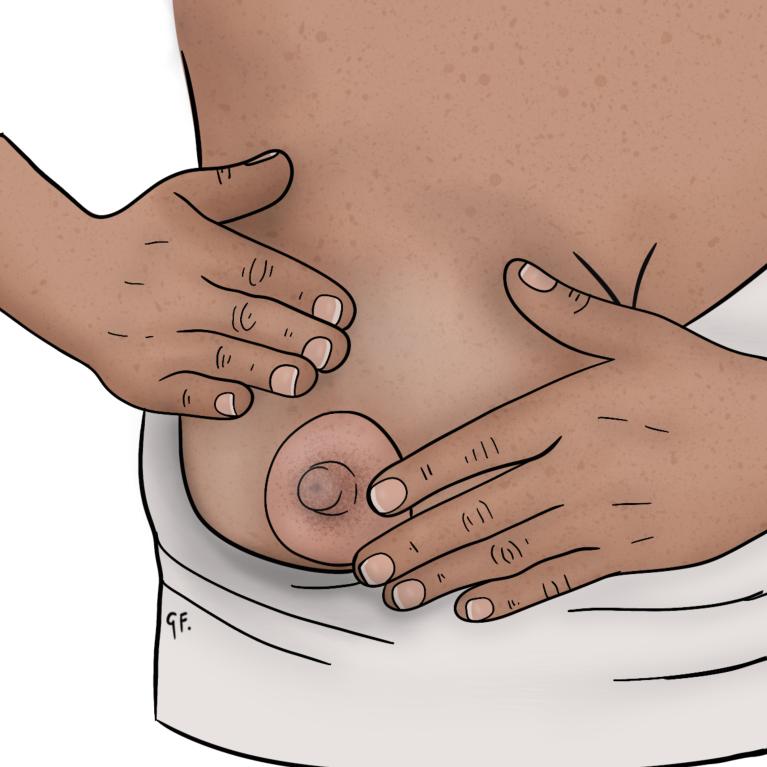
Place your thumb and fingers in a ‘C’ shape, around 2 to 3 centimetres back from the base of your nipple.
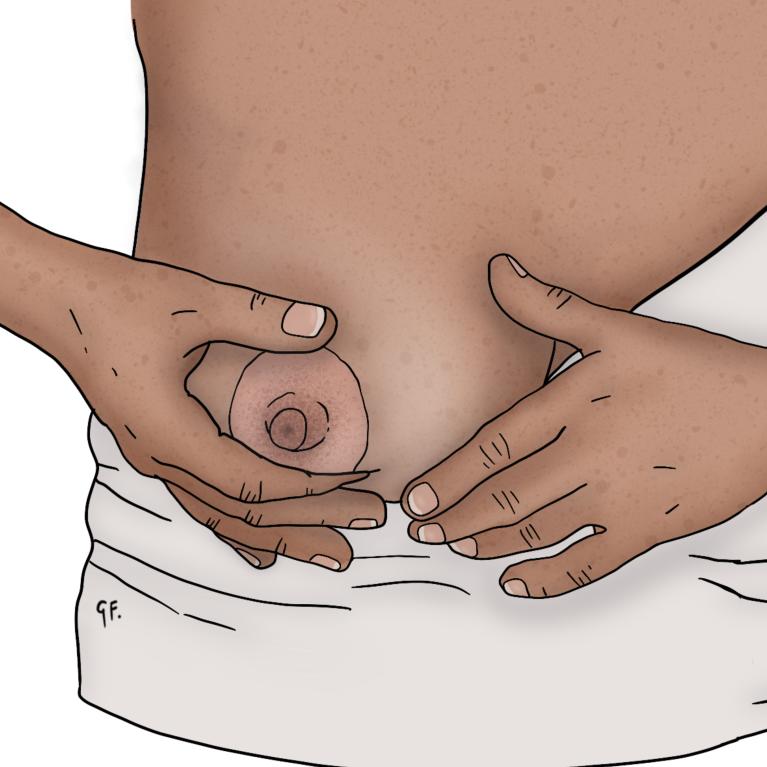
Gently press your fingers back towards your chest. Compress your thumb and fingers together, then release.
Keep pressing and releasing in a steady rhythm until your milk starts to flow. This may take a few minutes.
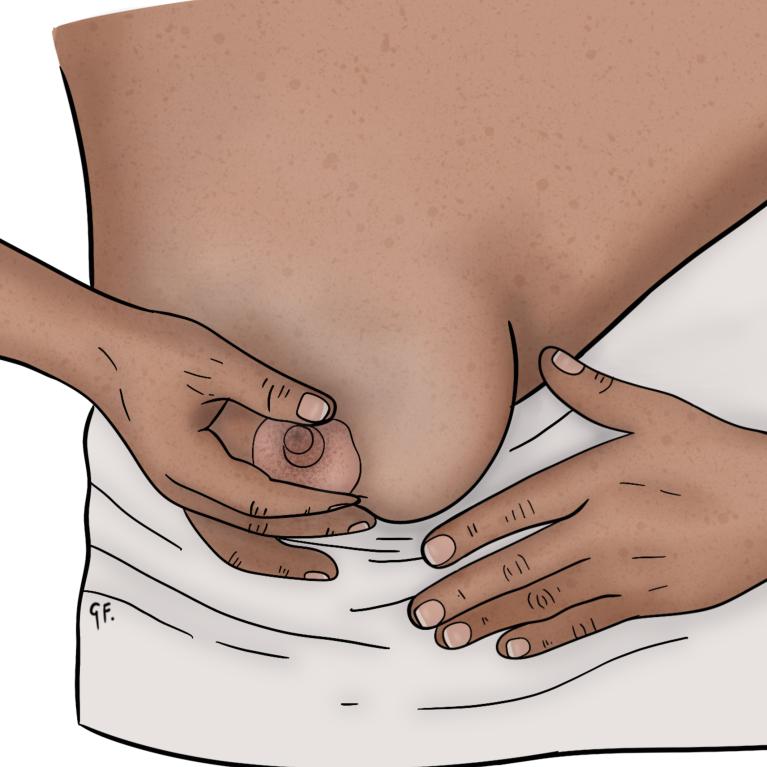
When the flow slows, move your fingers around to a different part of your breast and begin again.
You can then express from your other breast. If your baby feeds from only one breast, you could express from the other.
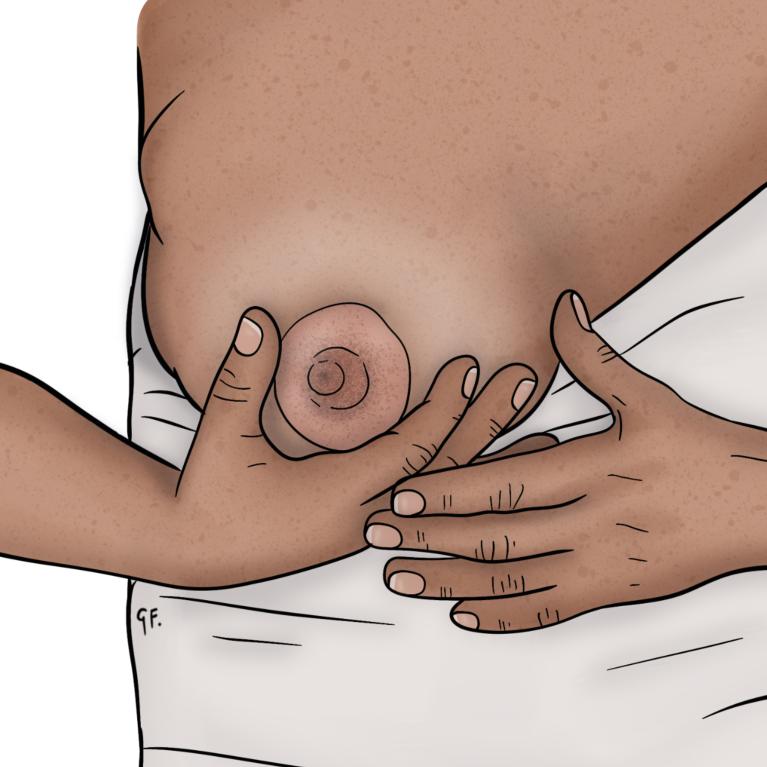
Collecting and labelling your colostrum
The neonatal unit will provide syringes or containers for collecting your colostrum. Staff will show you how to collect, label and store it safely.
Label each syringe or container as soon as you have finished expressing. Follow your neonatal unit’s instructions carefully. The label may need to include:
- your baby’s name and hospital number
- the date and time you expressed
- a number showing the order in which you expressed the milk
Labelling each container clearly helps staff identify your milk and use it in the right order. Colostrum changes during the first few days as your milk supply develops.
Some neonatal units use coloured or numbered stickers. The system may differ between units.
Keeping track of expressing
Recording when you express and how much you collect can help you keep track of your expressing routine.
Your neonatal unit may provide an expressing log or suggest an app you can use. Ask a member of your baby’s healthcare team if you need help. They can help you with expressing, collecting or labelling your milk.
Acknowledgements
Illustrations by Dr. Greta File. Property of KidsHealth.
Adapted from the leaflet: 'Collection and identification of colostrum in the Neonatal Unit. Neonatal Services. Matatiki, Child & Youth Health, Waitaha Canterbury'.
