

Key points about supporting your child when they need a blood test
- blood tests are common and help health professionals understand your child’s health
- many tamariki can have worries about blood tests - preparing your child ahead of time can help
- being calm, honest and supportive helps your child feel safe
- simple strategies can help your child cope during the test
- most blood tests are quick and only take a few minutes
What is a blood test?
A blood test is when a health professional takes a small sample of blood, usually from a vein in the arm or hand.
They use a small needle to collect the blood into a tube. The sample then goes to a laboratory for testing.
Why are blood tests needed?
Health professionals use blood tests to learn more about your child’s health. Blood tests can help:
- check for infections
- measure things like iron levels or blood sugar
- work out what might be causing your child's symptoms
- monitor long-term conditions
- see how well treatment is working
Preparing your child for a blood test
Be honest and use simple language
Explain what will happen in simple language. For example, you can say:
A small needle will take a little bit of blood.
You might feel something like a quick scratch or pinch, but it will be over quickly.
Avoid saying it will not hurt at all. This can reduce trust if your child does feel something.
Give information at the right time
For young tamariki, tell them shortly before the test. For older tamariki, you can tell them a day or 2 before.
Let your child ask questions
Encourage your child to ask questions and talk about how they feel.
If you are unsure how to answer, tell your child you will ask the health professional together. This helps your child feel more in control.
Practise coping strategies
Practise simple strategies at home so they feel familiar on the day. For example:
- slow breathing
- blowing bubbles
- choosing something to focus on like a toy or video
You can also make a simple plan together about what will help during the test.
See the page on needle phobia for more strategies.
What happens during a blood test
A health professional will check your child’s details and explain what will happen.
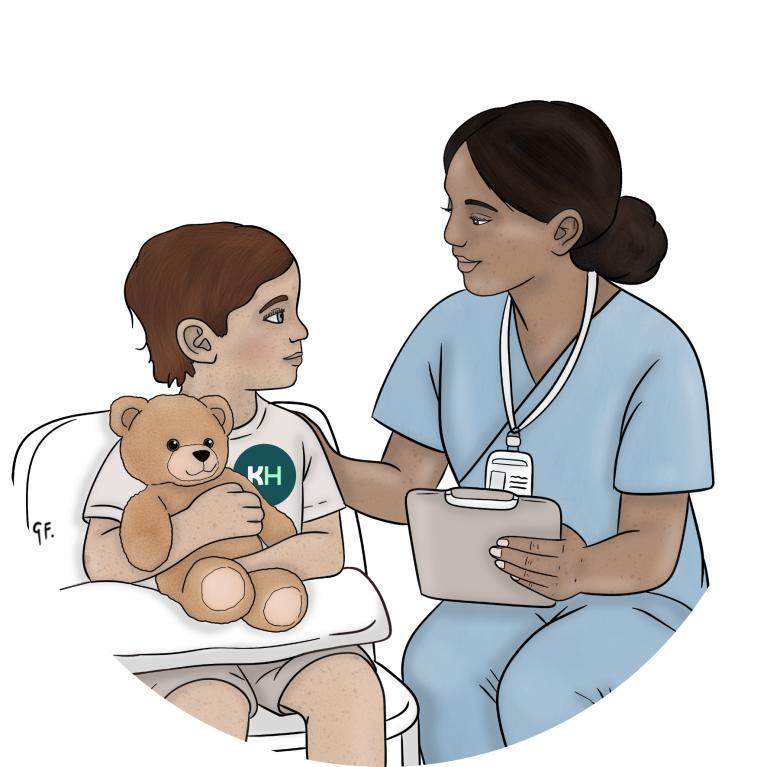
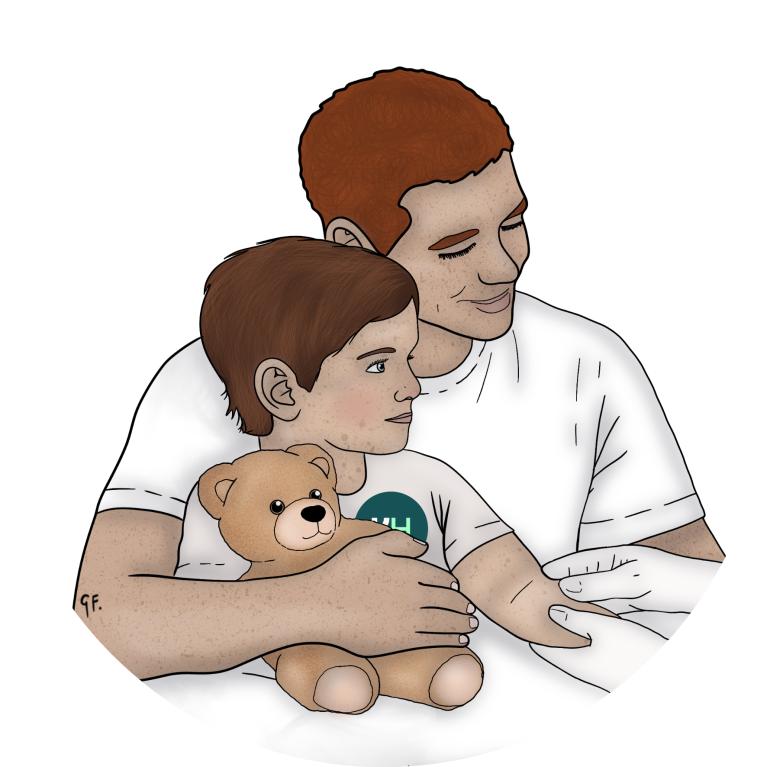
The health professional will help position your child safely. This may be sitting upright or on your lap. They may ask you to hold your child firmly to help keep them still.
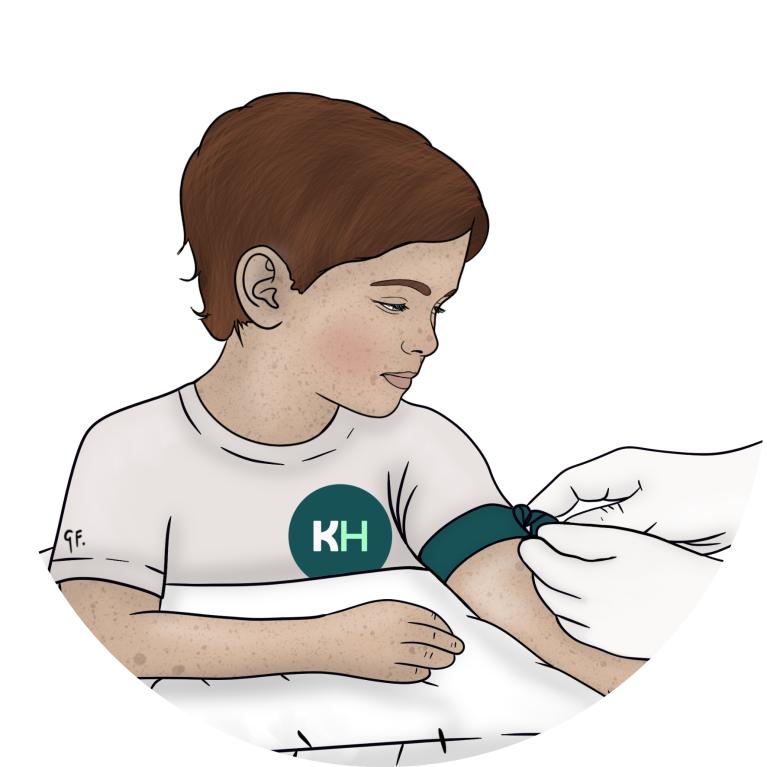
They will put a tight band (tourniquet) around your child’s arm. This helps make the vein easier to find.
They will clean the skin with an antiseptic wipe.
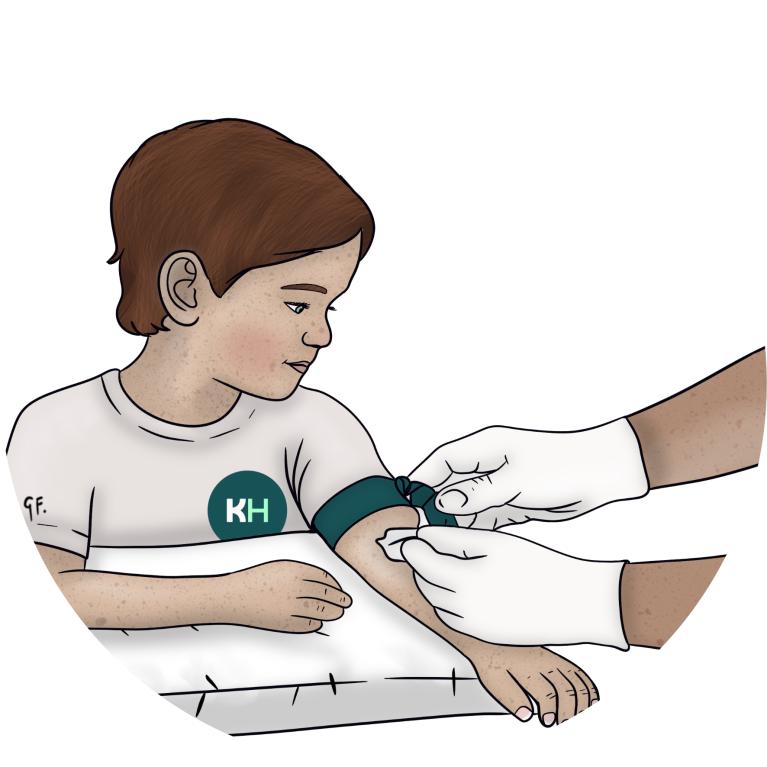
They will put a small needle into a vein and collect a small amount of blood into tubes. This part is usually very quick.
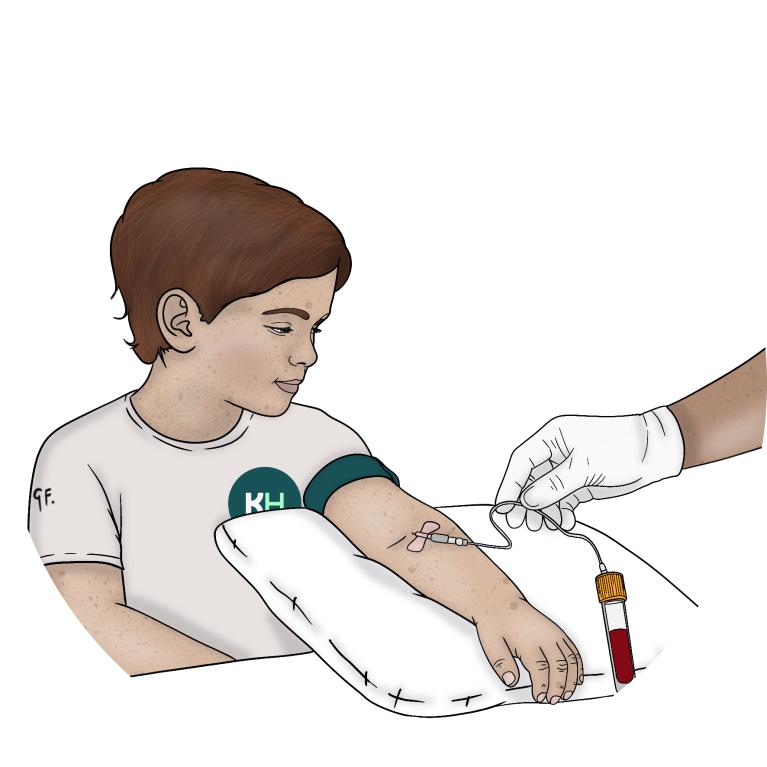
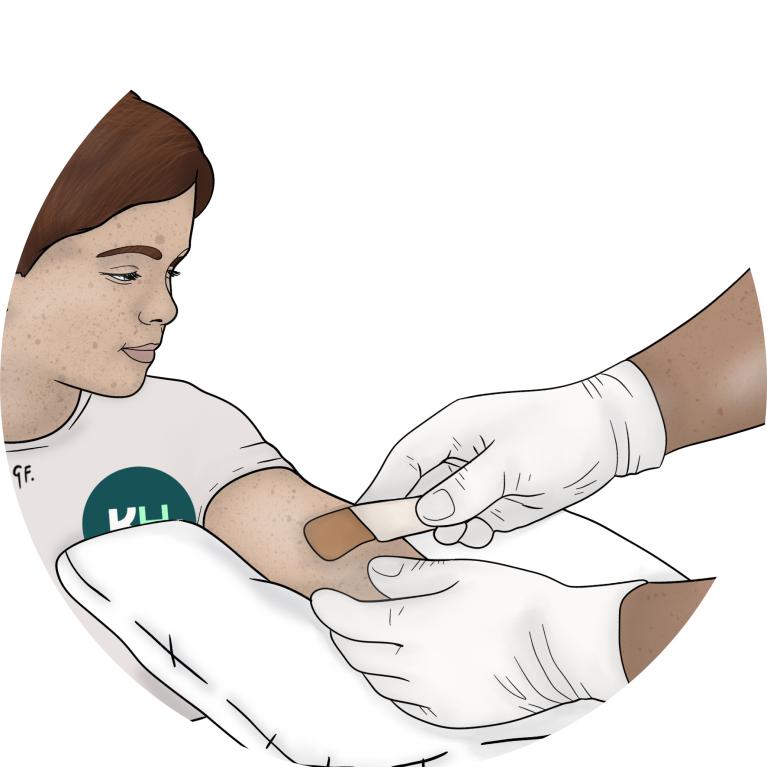
They will remove the needle, press on the area, and place a plaster or bandage.
How to support your child during their blood test
Stay calm and supportive
Your child will look to you for cues. Use a calm voice and simple language.
You can say:
I’m right here with you.
You’re doing really well.
Use distraction
Distraction helps your child focus on something other than the blood test. You can try:
- a favourite toy or book
- playing a game like ‘I spy’
- watching a video
- listening to music
- telling a story
- looking through a book such as ‘Where’s Wally?’ or a search-and-find book
Use breathing or relaxation
Encourage gentle slow breathing. Blowing bubbles or pretending to blow out candles can help calm the body.
Give small choices
Giving your child simple choices can help them feel more in control. For example:
- whether to look or look away
- which toy to hold or book to read
- what they want to watch or listen to
Comfort and positioning
You can hold your child’s hand or they can sit on your lap.
Pēpi (babies) and younger tamariki often cope better when you hold them snuggly.
The health professional will guide you on the best way to hold or support your child during the blood test.
Consider pain relief options
Numbing creams can reduce the feeling of the needle. You need to put them on before the test. Ask your health professional if this is suitable for your child.
After a blood test
Offer comfort and praise
Give your child praise and reassurance. This helps build confidence for future tests.
Return to normal activities
Most tamariki can go back to normal activities straight away.
Watch the site
A skin infection after a blood test is rare. You can keep an eye on where the needle went in. Get medical help if you notice:
- increasing redness
- swelling
- pus or fluid oozing from the area
- ongoing pain
Getting the results
Your health professional will tell you how and when you will get the results. If you have not heard back, contact your health professional.
